
Discover a softer side of dopamine decor, with thoughtful colors, playful details, and personal touches that make your living room feel more like you.
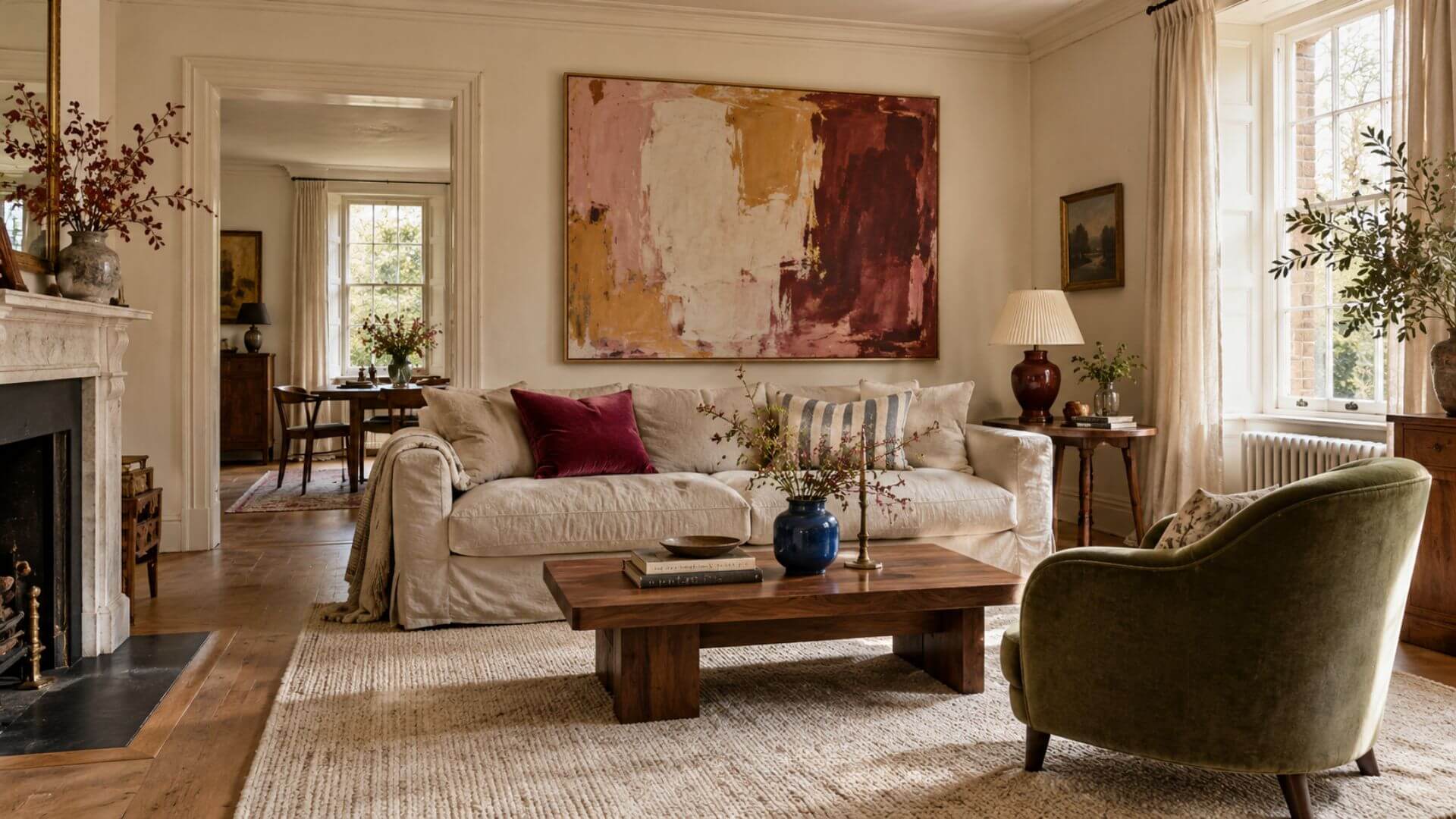 A beautiful living room doesn’t always make you feel something.
You can have the perfect neutral sofa, carefully chosen curtains, and a beautifully styled coffee table—and still feel that something is missing.
Perhaps everything matches a little too well. Perhaps you’ve chosen the sensible option so many times that the room no longer reflects your personality.
Or perhaps it simply needs one thing that makes you smile.
That’s where dopamine decor comes in.
The term describes a personal, feel-good approach to decorating, often associated with cheerful colors, playful shapes, nostalgic objects, and unexpected combinations. Despite its name, it isn’t a scientifically proven way to increase dopamine levels. Think of it as an invitation to notice what you enjoy—and give those things a place in your home.
And no, you don’t need a rainbow-colored sofa.
For Kotoa Living, the most appealing interpretation combines a calm, timeless foundation with a few expressive details: a raspberry cushion against chocolate brown, a striped lampshade on an antique table, or a painting that brings an otherwise quiet room to life.
Here are seven ways to bring that spirit into your living room.
1. Choose a Color You Love—Before Asking Whether It Matches
Think about the colors you’re drawn to outside the world of interiors.
The blue of a favorite coastline. The golden yellow of autumn leaves. The rich red of a flower you always stop to admire.
These are useful clues. A color with a personal connection can be a more satisfying starting point than one chosen simply because it’s fashionable.
Begin with something small enough to move around.
Try a raspberry velvet cushion on a chocolate-brown armchair, a glossy cobalt vase against warm ivory walls, or a butter-yellow throw draped over a navy sofa.
Let the new color sit in the room for a few days. Notice it in morning light and in the evening. Does it draw you toward that corner? Do you enjoy seeing it?
You don’t need to build an entire palette immediately.
The Kotoa Living idea: Start with one accent you love. If you want a more connected look, echo it in one or two smaller details—a color in a painting, a book cover, or fresh flowers.
2. Introduce a Pattern Where You Least Expect It
A room can have a beautiful color palette and still feel a little flat.
Pattern adds another kind of energy. A stripe creates rhythm, a check brings a playful note, and a loose floral can soften straight-lined furniture.
The unexpected part is where you use it.
Instead of adding another patterned cushion, consider a pleated striped lampshade. Try a small checked ottoman beside a plain linen sofa, or frame a piece of vintage patterned fabric as art.
Imagine a blue-and-cream striped shade on a dark wooden side table. The table feels traditional; the stripe makes the combination lighter and more spirited.
If you prefer a quieter look, choose a pattern that includes colors already in the room.
The Kotoa Living idea: Give one pattern room to stand out. Pair it with simpler surfaces so you can appreciate its shape and rhythm.
3. Let One Piece Break the Style Rules
Perfectly coordinated rooms can leave little room for surprise.
A more personal interior often includes something that doesn’t quite belong—and is better for it.
A sleek modern lamp on an antique chest. A curved contemporary chair beside a traditional fireplace. A bold abstract painting above a classic sofa.
The contrast gives familiar pieces a fresh context.
You may already own the right object. Before buying anything, try moving a piece from another room: a vintage chair, a small painted cabinet, or a mirror you haven’t found a place for.
Look for one connection that helps the pairing feel comfortable. That might be a shared wood tone, a curved shape, or a color repeated elsewhere.
The Kotoa Living idea: Keep the surrounding arrangement simple and let the unexpected pairing become the focal point.
4. Create a Corner Around Something You Enjoy
Some decorating decisions begin with an empty space.
Try beginning with a favorite activity instead.
Perhaps you love reading on Sunday mornings, listening to an album from beginning to end, or sitting by the window with a cup of coffee.
What would make that moment more enjoyable?
For reading, it might be a comfortable chair, a well-positioned lamp, and somewhere to put your book. For music, it could be a seat angled toward the speakers, with favorite records within reach.
Then add one detail that gives the corner its own character: a moss-green throw, a small colorful print, or a ceramic cup you enjoy using.
This is a quieter expression of dopamine decor. The pleasure comes from how you use the space as much as how it looks.
The Kotoa Living idea: Finish the sentence “I’d spend more time here if…” Let the answer guide your next change.
 5. Display Something With a Story
Some of the most compelling details in a room are the ones a visitor might ask about.
Where did you find that painting? Who made that bowl? Has that chair always been in your family?
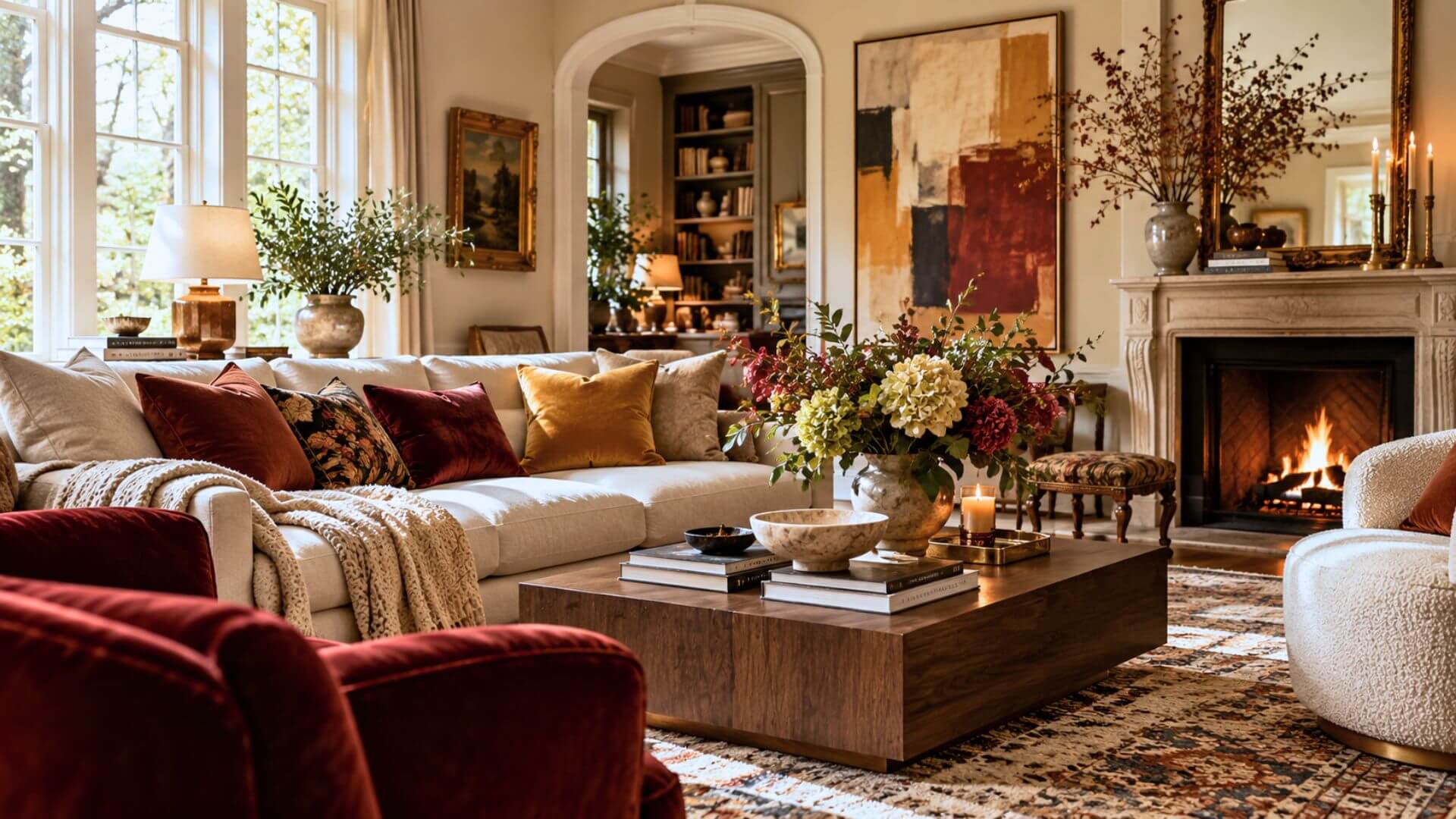
A travel find, an inherited object, or a photograph from a happy day gives your living room a connection to your life.
It doesn’t need to be valuable or rare.
A small watercolor bought on vacation can be worth framing beautifully. A handmade bowl can sit on the coffee table instead of waiting in a cupboard. An old family photograph can become part of a mix of contemporary artwork.
Give a meaningful piece enough space to be noticed. A crowded shelf can hide the very objects you most want to enjoy.
The Kotoa Living idea: Choose one treasured object and display it as thoughtfully as you would a new purchase. Its story deserves a good spot.
6. Make a Lamp Part of the Personality
Lighting offers two opportunities to change a room: the light itself and the object that provides it.
A sculptural ceramic base, a scalloped shade, or a small colored-glass lamp can bring character to a corner during the day. In the evening, it becomes part of the room’s atmosphere.
Try an ochre lamp on a dark wooden sideboard, or a burgundy base beside pale upholstery. Even a familiar lamp can feel different with a new shade.
Then consider where the light falls.
A lamp beside a chair invites you to sit down. One on a sideboard draws attention to artwork or objects nearby. Several thoughtfully placed lamps let you adjust the room to what you’re doing.
Keep reading light bright and well positioned, while using softer light where you want a relaxed mood.
The Kotoa Living idea: Look around your living room after sunset. Find the corner that feels least inviting and start there.
7. Add One Detail Simply Because It Delights You
Perhaps you’ve found something you love, then dismissed it.
Too colorful. Too unusual. A little too playful for the rest of the room.
It might be exactly the detail worth trying.
A wavy mirror above a restrained console. A whimsical ceramic object among serious art books. An oversized paper lantern floating above classic furniture.
The piece doesn’t have to become the theme of the whole room. It can be a small moment of delight within a more familiar setting.
Before choosing it, consider whether you enjoy the object itself or mainly the idea of trying something new. Can you imagine still liking it when the novelty wears off?
That question helps you find playful pieces with lasting appeal.
The Kotoa Living idea: Try a small, movable piece first. Put it somewhere you’ll see it often, and give yourself time to decide how it feels.
Can Dopamine Decor Still Feel Calm and Timeless?
Yes. There’s no required level of brightness, pattern, or abundance.
Your version might be a cream living room with a colorful painting and a treasured vintage chair. Someone else might prefer pink walls, patterned upholstery, and shelves full of collectibles.
If you enjoy a calmer interior, keep the larger elements that already work: your sofa, rug, curtains, and natural materials. Introduce color and playfulness through details you can move, rearrange, or change.
A useful starting point is one expressive accent, one interesting contrast, and one object with personal meaning. These can overlap—a vintage lamp might bring all three.
Leave some quieter areas around them. An empty stretch of wall or a simple tabletop gives your favorite details space to be appreciated.
A Living Room That Feels Like You
There’s no need to replace beige if you love it.
But if you’ve been waiting for permission to choose the red lampshade, frame the unusual print, or bring your favorite old chair back into the room, consider this your invitation.
Start with one detail. Move it around. See what happens when it becomes part of your everyday surroundings.
The aim is a living room you enjoy spending time in—one that holds your memories, welcomes your habits, and leaves room for a little surprise.
Sometimes, the finishing touch is the thing you chose simply because you loved it.
Explore more living room ideas, thoughtful color combinations, and timeless interior inspiration at Kotoa Living.