
Step inside Titanic’s first-class world, where elegant interiors, remarkable comforts and a changing culture of leisure reveal a fascinating chapter in the history of modern living.
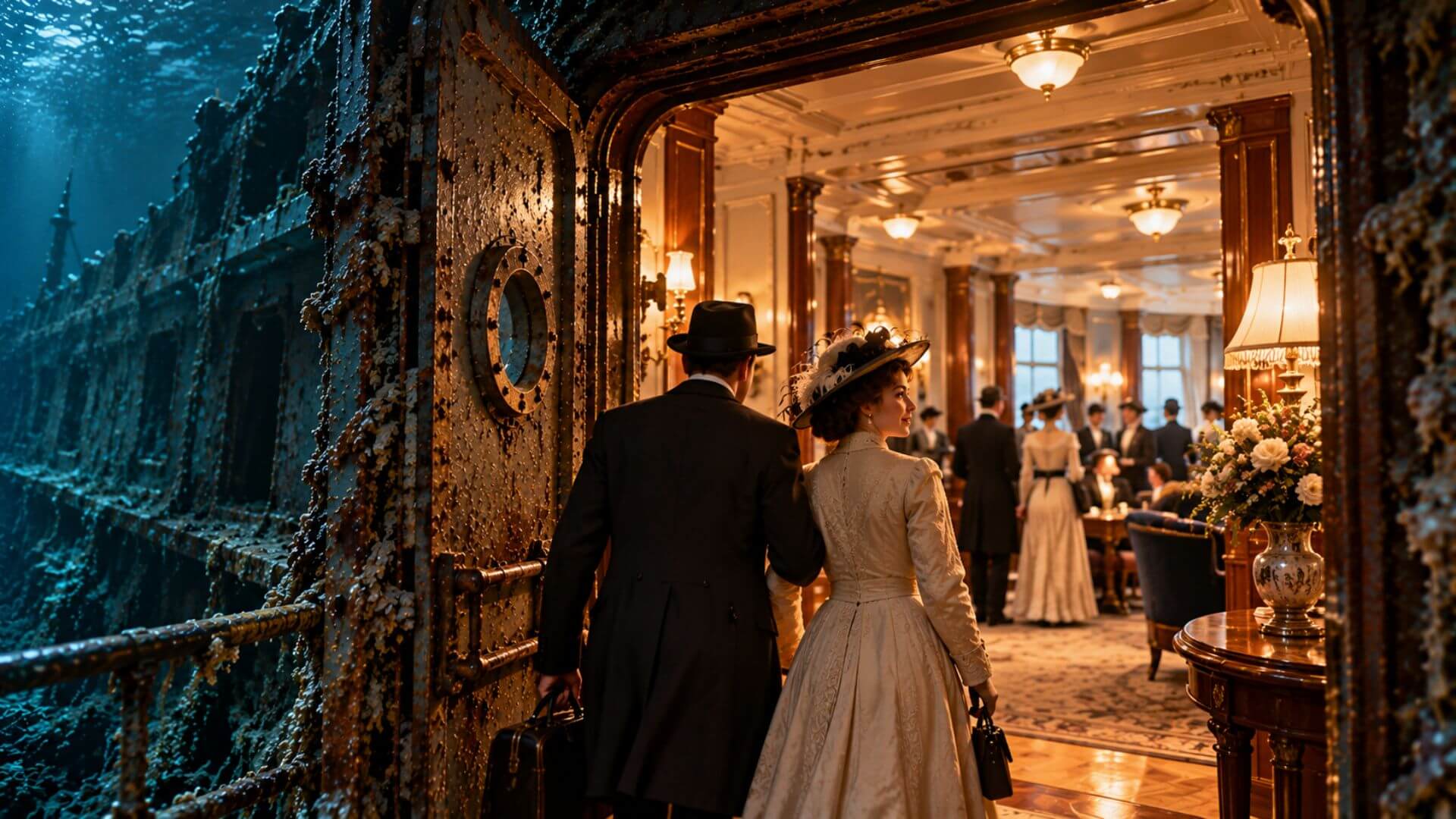
Deep beneath the Atlantic, almost 3,800 metres below the surface, Titanic rests in darkness.
The grand staircase is silent. The dining rooms are empty. The voices that once filled the corridors have long since disappeared.
But imagine, for a moment, that we could step through the weathered remains of the ship and travel back to April 1912.
A door opens.
Warm light spills into the passageway. Footsteps echo across polished floors. Somewhere nearby, passengers are gathering for breakfast.
Welcome aboard Titanic.
Not to revisit the tragedy that made her famous, but to discover something quieter: the extraordinary world of everyday life that existed before it.
For her first-class passengers, Titanic was more than a means of crossing the Atlantic.
She was a floating world where home, hotel, society and leisure came together under one roof.
And in many surprising ways, that world still feels familiar today.
 A Floating World of Comfort and Elegance
Imagine arriving aboard Titanic in April 1912.
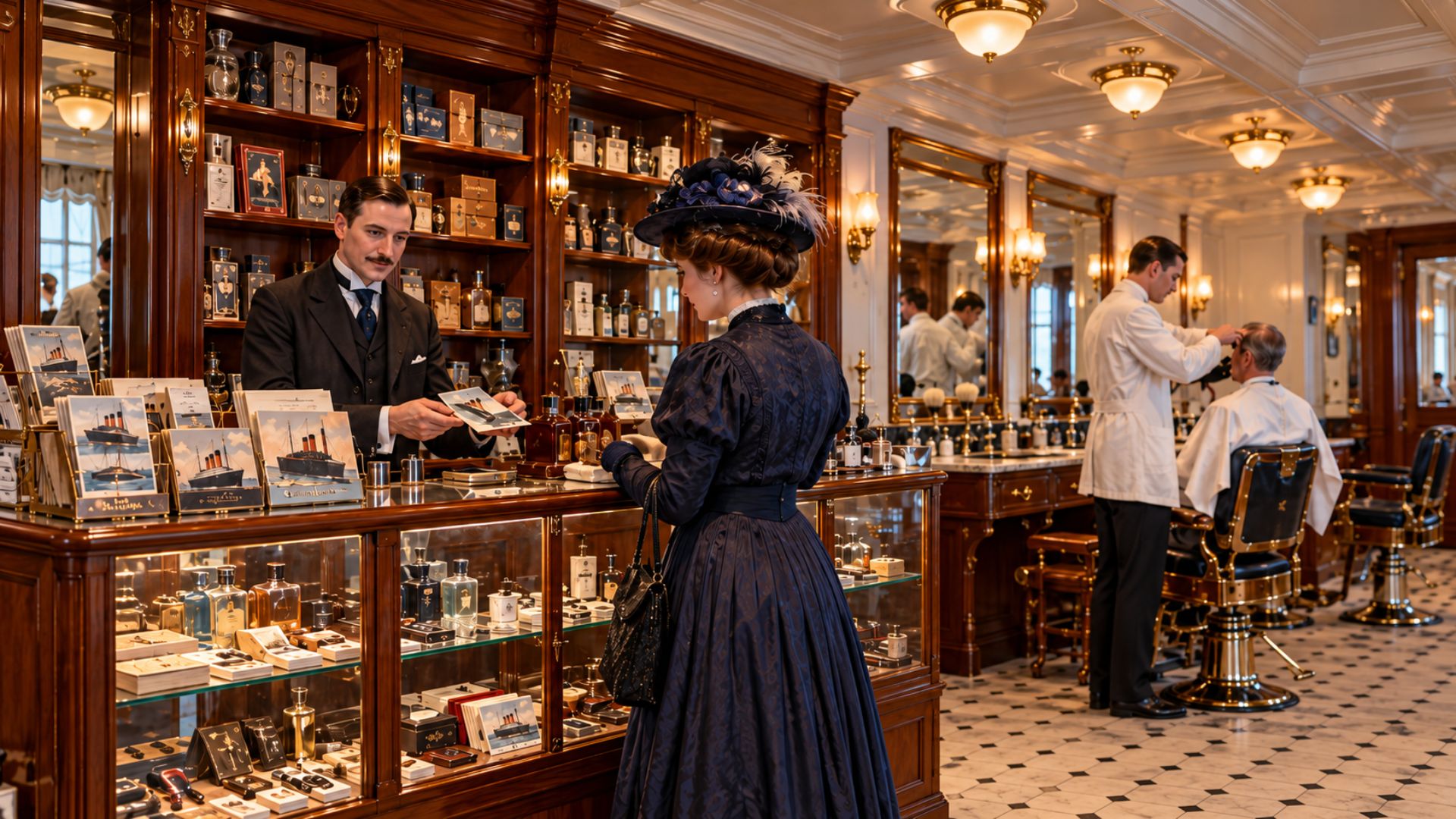
Beyond the entrance lay a succession of interiors designed to make an ocean crossing feel less like a journey and more like a stay in an exceptional hotel.
There were richly furnished lounges, elegant dining rooms, intimate spaces for conversation and quieter rooms for reading or writing.
At the heart of the first-class accommodation stood the Grand Staircase, with its carved oak details, sweeping balustrades and glass dome overhead.
It was more than a way of moving between decks. It was a statement of arrival.
The ship’s interiors drew inspiration from European decorative traditions, including Georgian, Louis XVI and other historical styles. Each room had its own character.
Some spaces were formal and impressive. Others were designed to feel comfortable and reassuringly domestic.
That contrast was deliberate.
Although Titanic represented the latest achievements in engineering, much of her interior beauty looked to the past.
The result was a remarkable combination: modern technology hidden behind the familiar elegance of a grand residence.
For passengers accustomed to fine hotels and fashionable homes, the surroundings offered a sense of continuity.
They were at sea, yet many of the comforts of life ashore had travelled with them.
 The Luxury of Feeling at Home
Behind the public rooms was another, more private world.
The first-class cabins varied considerably, from relatively modest rooms to elaborate suites with separate sitting areas.
The most expensive accommodation offered an extraordinary degree of privacy and comfort. Some suites even had their own private promenade spaces.
Yet not every first-class passenger occupied such magnificent quarters.
This was a ship with a hierarchy of luxury, even within its most privileged class.
Imagine a quiet morning in one of the finer cabins.
A passenger sits beside the window, dressed for breakfast. A steward arrives with covered dishes, carefully prepared to keep the food warm during the journey from the galley.
Breakfast could indeed be served in first-class cabins — an unusually hotel-like convenience for its time.
There might be letters to read, clothing to prepare for the day or a newspaper to browse.
Outside, the Atlantic stretches towards the horizon.
It is an ordinary moment, made extraordinary by its surroundings.
And perhaps that was one of Titanic’s greatest luxuries: the possibility of maintaining familiar routines while travelling across an ocean.
Comfort was no longer simply about beautiful furniture.
It was also about privacy, convenience and having someone attend to the small details of daily life.
 Before Modern Wellness: Fitness, Baths and Recreation
A gymnasium aboard Titanic?
In 1912?
It may sound surprisingly modern, but Titanic offered a collection of recreational facilities that would not seem entirely out of place in a luxury resort today.
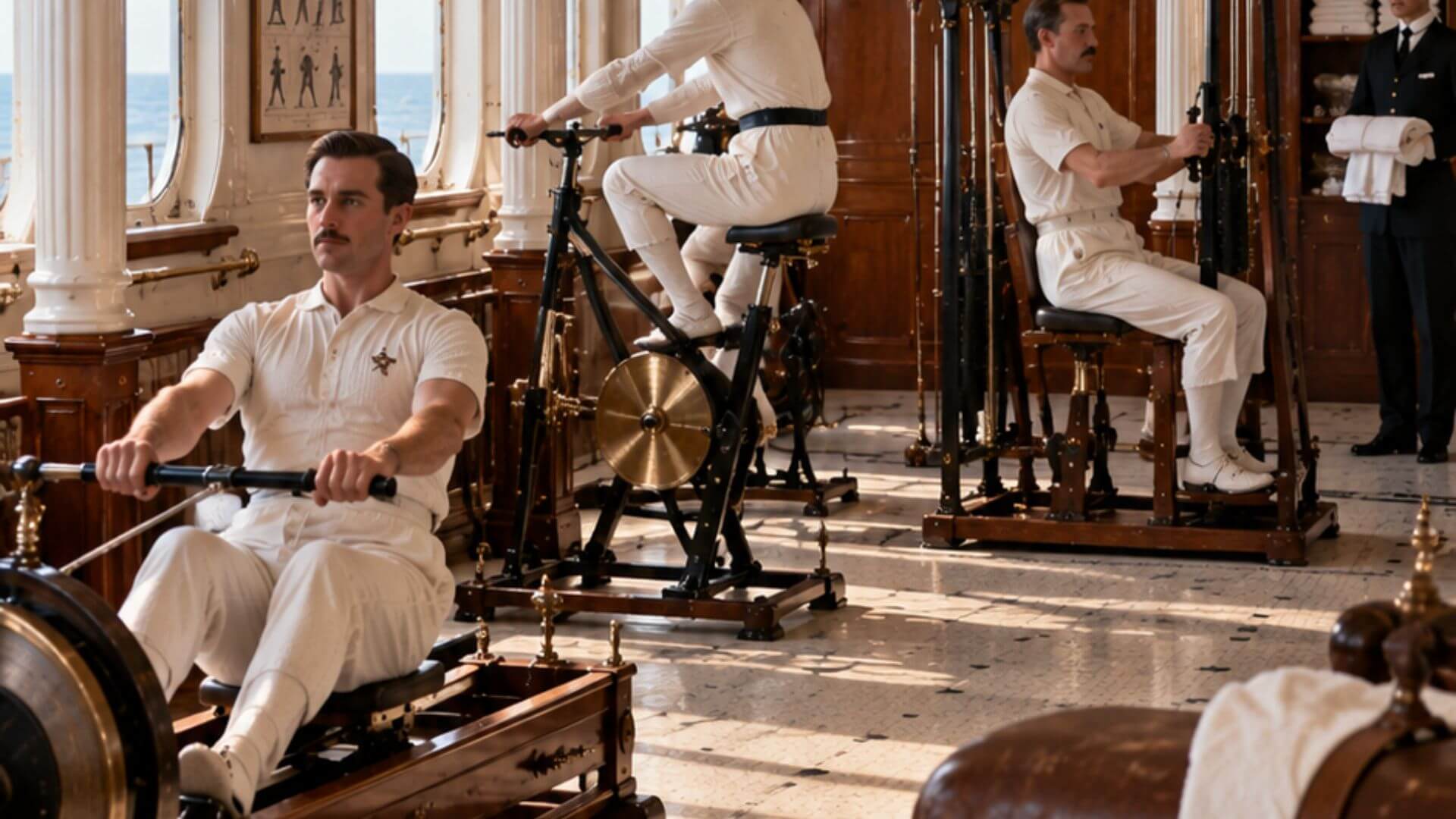
On the Boat Deck, first-class passengers could visit a gymnasium equipped with exercise bicycles, a rowing machine and unusual mechanical riding machines.
Among them were an electric horse and an electric camel, designed to imitate the movement of riding.
The equipment looks wonderfully curious to modern eyes.
Yet the underlying idea is familiar: physical exercise could be part of a pleasurable, well-organised daily routine.
Passengers could also play squash on a dedicated court, with a viewing gallery above.
Elsewhere aboard the ship were a heated swimming bath and Turkish baths, where guests could enjoy a sequence of bathing and relaxation experiences.
The Turkish baths were particularly atmospheric, with decorative tiles and furnishings inspired by styles associated with the Middle East.
These facilities were not equally available to everyone aboard. They formed part of the privileges associated with first-class travel, and some required additional payment.
Nor did Titanic invent the idea of exercise, bathing or leisure.
But bringing so many activities together on an ocean liner reflected a broader change in how affluent travellers expected to spend their time.
A journey could offer more than transportation.
It could become an experience in itself.
Today, we recognise the same principle in wellness hotels, spas, fitness retreats and cruise ships.
The equipment has changed.
The desire to feel well while away from home has not.
 The Art of Leisure: Tea, Conversation and Quiet Pleasures
Not every pleasure aboard Titanic required activity.
Some of the most memorable spaces were created for doing very little at all.
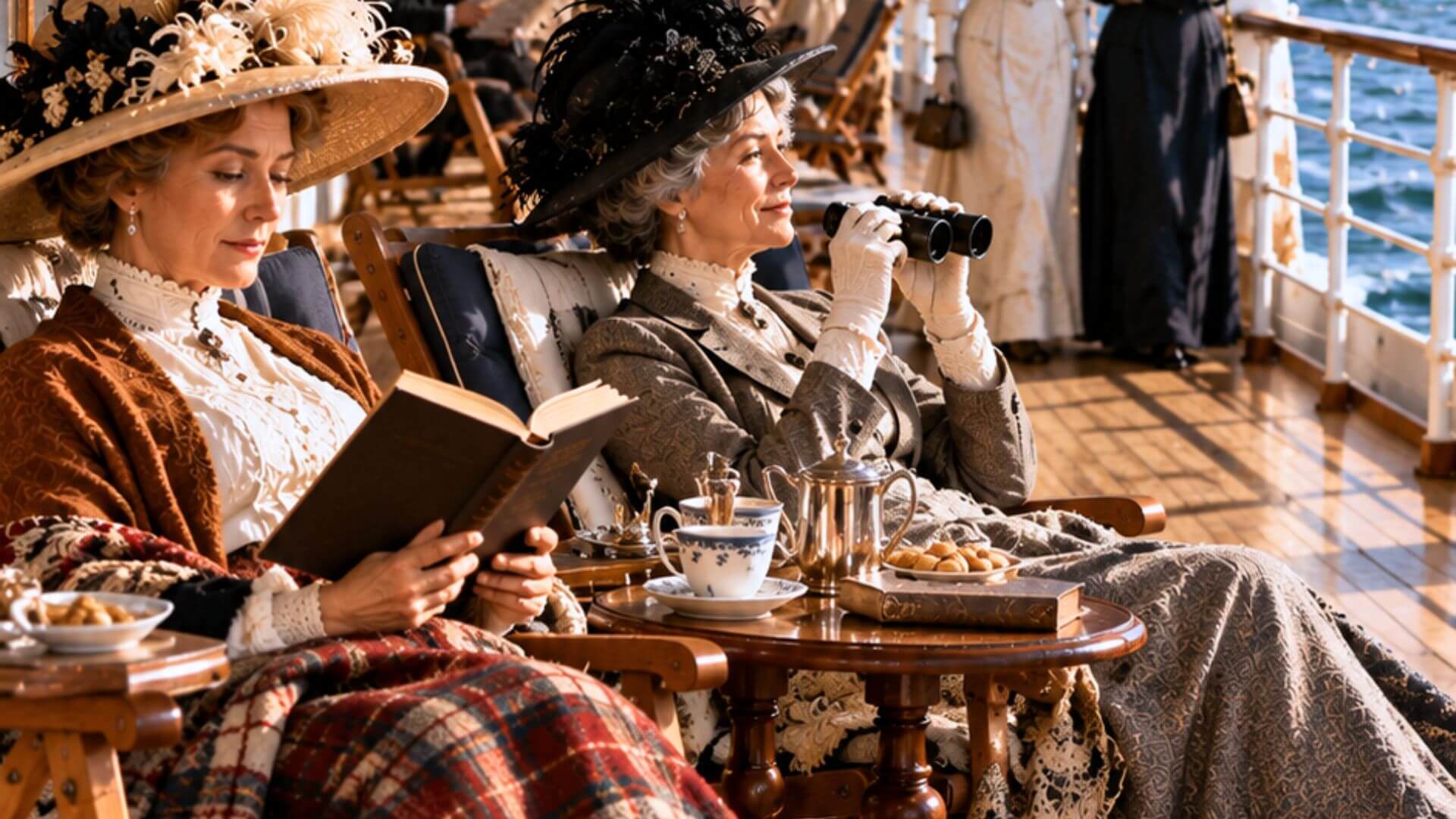
In the first-class reading and writing room, passengers could settle into comfortable surroundings to read or compose letters.
Elsewhere, the lounge offered a setting for conversation and relaxation.
Tea could be enjoyed in elegant surroundings, while the Café Parisien offered a more informal atmosphere inspired by fashionable European café culture.
The first-class smoking room provided a distinctly masculine social environment, where gentlemen could gather over cards and conversation.
These spaces reflected the social customs of their time. Leisure was shaped not only by personal preference but also by expectations surrounding gender, class and appropriate behaviour.
Even so, many of the activities themselves feel remarkably ordinary.
Reading.
Writing to someone at home.
Sharing a cup of tea.
Talking with friends.
Watching the world go by.
On deck, passengers could sit in wooden steamer chairs, wrapped in rugs against the cool Atlantic air.
There was no endless stream of digital entertainment.
Instead, the passing hours might be filled with conversation, observation and the simple pleasure of being somewhere different.
Of course, life in 1912 was not universally slower or more restful. For many people, work was physically demanding and free time was limited.
But among Titanic’s wealthiest passengers, leisure had become an important part of the travel experience.
It was something to be planned for, accommodated and enjoyed.
Perhaps that is what makes these interiors so interesting today.
A beautiful room was not simply somewhere to look at.
It was somewhere to spend time.
A World for Every Generation
Titanic’s first-class world was not inhabited only by fashionable young couples and distinguished gentlemen.
There were families, children, older passengers and people travelling alone.
Each brought different habits, expectations and needs.
For younger passengers, Titanic offered a dedicated playroom filled with toys and activities.
It was a space where childhood had its own place within the carefully organised life of the ship.
The room’s cheerful decoration contrasted with the more formal interiors elsewhere.
Dolls, games and imaginative play offered a welcome change from the routines of adult society.
Some children travelled with nurses or governesses, reflecting the customs of affluent Edwardian families.
Meanwhile, older passengers might prefer the comfort of a quiet lounge, a sheltered deck chair or an unhurried conversation.
A voyage could be social or solitary.
Active or restful.
And the ship offered spaces for all these different rhythms.
This is an aspect of interior design that remains just as relevant today.
The most successful spaces are not necessarily those that make the strongest visual impression.
They are the ones that understand how different people actually live.
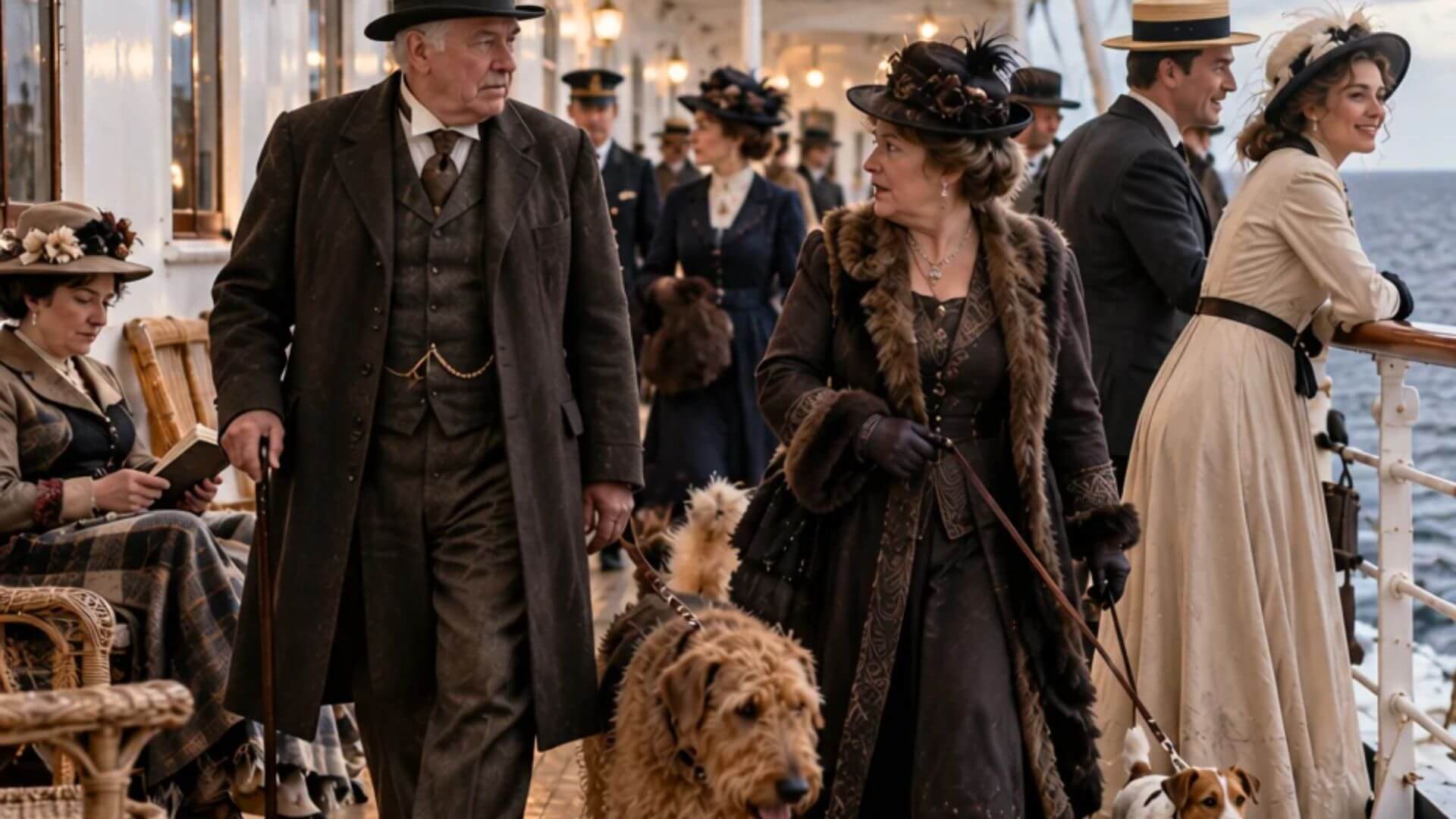 Four-Legged Passengers: Dogs Aboard Titanic
Among Titanic’s passengers were some rather unexpected travellers.
Dogs.
At least twelve are known to have been aboard, many belonging to first-class passengers.
The ship had kennel facilities, and dogs were given exercise on deck. Some smaller pets were also kept in their owners’ cabins.
The breeds included Airedale terriers, Pomeranians and other companion dogs familiar to the Edwardian world.
One particularly touching detail is that an informal dog show had been planned for April 15.
It never took place.
It is easy to imagine an ordinary moment earlier in the voyage: an older passenger walking with a terrier, a younger couple leaning against the rail, a steward attending to another dog nearby.
The scene is imagined, but the presence of pets aboard Titanic is well documented.
And it adds something wonderfully human to the story.
Even aboard one of the world’s most celebrated luxury liners, people wanted the companionship of their animals.
Some comforts have very little to do with grand interiors.
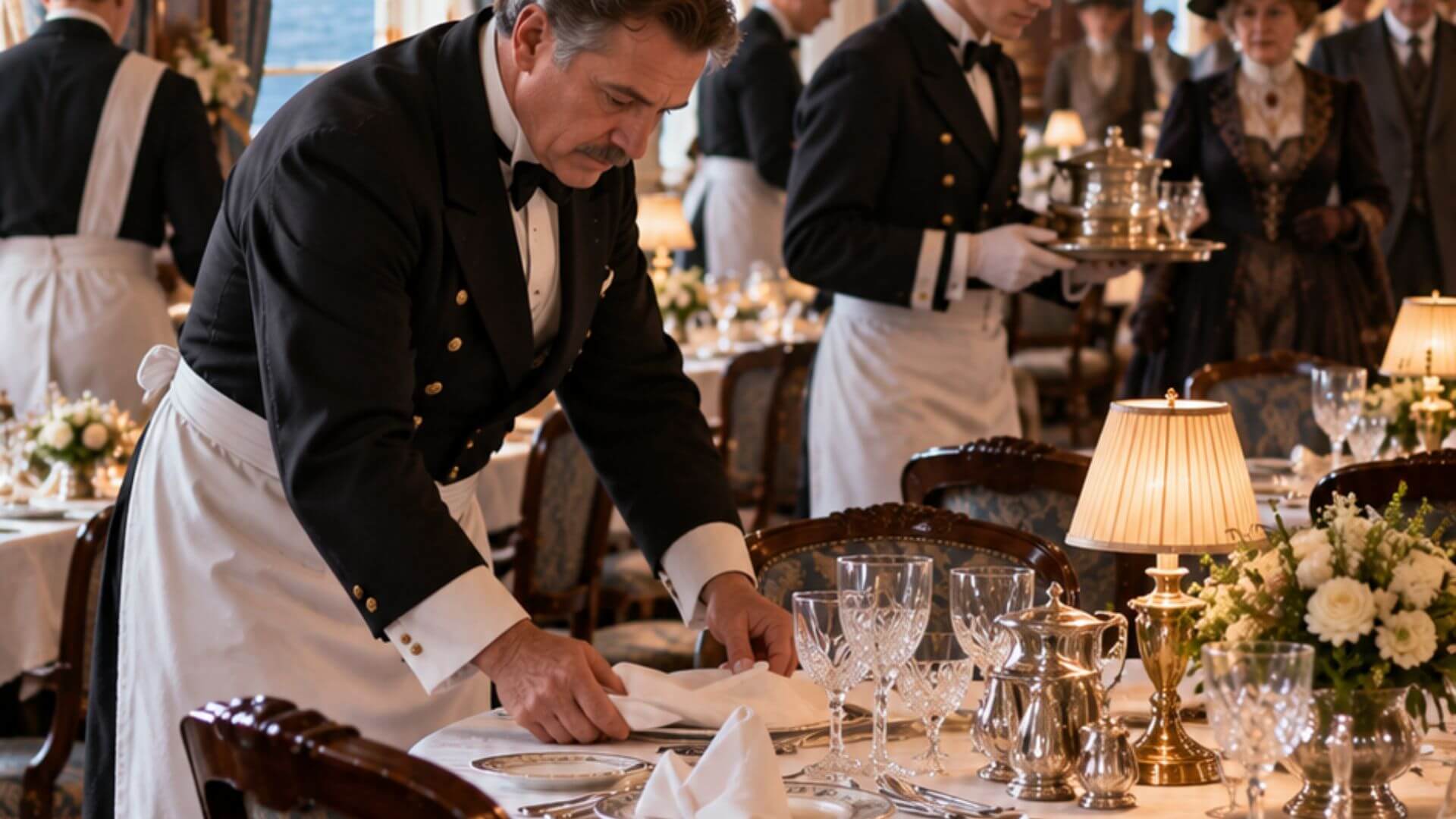 Behind the Luxury: The People Who Made It Possible
There was another world behind Titanic’s beautiful public rooms.
One of long working hours, carefully organised routines and constant attention to detail.
The polished silver did not arrange itself.
The breakfast trays did not appear by magic.
And the elegant cabins required cleaning, preparation and daily care.
Stewards, waiters, cooks, cleaners and many other crew members worked to maintain the standards expected by first-class passengers.
Before a meal, tables had to be prepared.
Linens were arranged. Glasses polished. Cutlery placed precisely.
While passengers relaxed, others were busy making that relaxation possible.
This contrast is an essential part of Titanic’s story.
The ship brought together people from very different social and economic backgrounds, but they did not experience the voyage in the same way.
First-class luxury existed alongside the working lives of the crew and the very different accommodation provided for second- and third-class passengers.
For many third-class travellers, the journey represented something more significant than a holiday: the possibility of a new life across the Atlantic.
Our journey through Titanic’s first-class interiors reveals only one part of the ship.
It was an extraordinary part, certainly.
But it was never the whole story.
Remembering the people who worked behind the scenes gives those beautiful rooms a deeper meaning.
Luxury was not just a matter of design.
It was also the result of human effort.
What Titanic Still Teaches Us About Modern Living
More than a century later, Titanic’s first-class interiors offer an unexpected perspective on the way we live today.
The styles may seem distant.
Heavy carved furniture, elaborate ceilings and formal dining rooms belong to a world very different from contemporary interiors.
Yet the needs behind those spaces are surprisingly familiar.
We still create quiet corners for reading.
We gather around tables to share meals.
We value privacy, comfortable bedrooms and places where we can relax without interruption.
We seek opportunities for exercise, wellbeing and time with the people — and animals — we love.
Modern interiors often favour simpler forms and fewer decorative details.
But the desire to feel at ease has changed remarkably little.
Titanic also reminds us that comfort is about more than possessions.
A beautiful chair matters because someone can sit in it.
A welcoming room matters because people want to spend time there.
And thoughtful design matters because it shapes the small moments of everyday life.
Perhaps that is the most enduring connection between Titanic’s lost interiors and our homes today.
The finest spaces do not simply impress us.
They make life feel more comfortable, meaningful and human.
A World That Lives On in Memory
Our journey ends where it began.
Deep beneath the Atlantic, Titanic rests in silence.
The rooms that once held conversation, laughter and the ordinary routines of daily life are now part of history.
Yet for a brief moment, we have imagined them filled with life again.
Not only with luxury and beautiful interiors, but with the people who lived and worked within them.
And perhaps that is the most meaningful way to remember Titanic.
Not only as a ship that was lost, but as a world that was once alive.
Editor’s note: This article focuses on Titanic’s first-class accommodation and leisure culture. The accompanying AI-generated images are imaginative historical illustrations, not original photographs or exact reconstructions. The opening journey from the wreck into 1912 is a fictional visual device.