
Beautiful changes don’t always require big renovations. Discover seven thoughtful, budget-friendly ways to transform your home with a warm Nordic touch.
What if your home didn’t need a renovation — just a fresh perspective?
Sometimes, the biggest difference comes from the smallest decisions. A wall painted in the right shade. A lamp moved to a forgotten corner. A piece of furniture given a new purpose.
In Nordic-inspired interiors, creating a beautiful home isn’t necessarily about buying more or replacing everything. It’s about finding balance between light, color, comfort, natural materials, and the things you already love.
There’s also something quieter at the heart of Nordic living: the idea that home should offer a sense of calm and belonging.
And the good news? This approach works beautifully in American homes, too.
Whether you’re refreshing a suburban living room, settling into your first apartment, or simply tired of looking at the same four walls, these seven small home updates can make a surprisingly big difference.
No major renovation required.
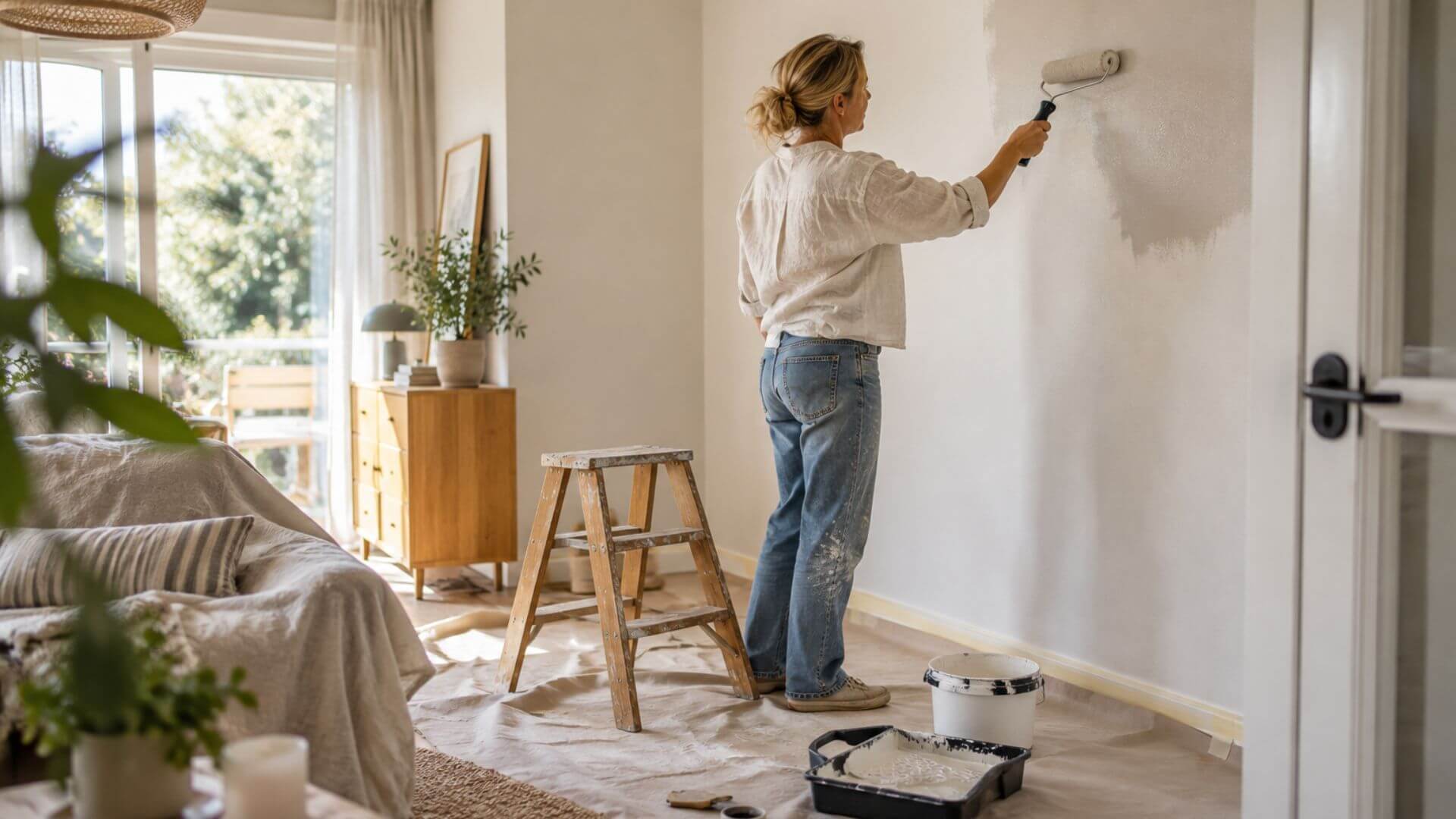 1. Paint One Wall — But Make It Feel Like Part of the Whole Room
Estimated DIY budget: $40–$120
An accent wall is one of the simplest ways to change the atmosphere of a room without repainting the entire space.
But forget the idea that an accent wall always needs to be bold or dramatic.
A soft, warm beige wall behind a cream sofa can be just as transformative as a deep green or navy feature wall.
The Nordic approach is less about creating contrast for its own sake and more about giving the room a sense of harmony.
Imagine a living room with pale walls, a natural wood coffee table, and a neutral sofa. Painting the wall behind the sofa in a muted mushroom beige can add depth without making the room feel darker or smaller.
Try these warm, Nordic-inspired shades:
-
Mushroom beige — subtle depth without strong contrast.
-
Muted sage — a gentle connection to nature.
-
Warm greige — a soft balance between gray and beige.
-
Dusty blue — understated color with a calming character.
-
Soft clay — warmth and personality without overwhelming the room.
Are accent walls still in style?
Yes, but an accent wall doesn’t need to demand attention to feel contemporary.
A thoughtfully chosen wall color can quietly connect the furniture, textiles, and architectural features of a room.
For a more enveloping look, consider painting an entire room in a soft, cohesive shade rather than creating a sharply contrasting feature wall. This approach is often called color drenching.
The Nordic touch: Choose a color that feels like a natural extension of your room, not an interruption.
Before you begin: Test large paint samples in morning and evening light. Check whether your wall needs primer, patching, or additional coats. If you’re renting, confirm that painting is permitted.
2. Change the Lighting, Change the Atmosphere
Estimated budget: $30–$180
Have you ever noticed how a beautifully furnished room can feel surprisingly uninviting under a single bright ceiling light?
Lighting is one of the most underestimated elements of interior design.
Across the Nordic countries, where winter daylight can be limited, soft and thoughtfully placed lighting has long been part of creating a welcoming home.
Rather than relying on one strong overhead fixture, try combining several smaller light sources.
A table lamp beside the sofa, a floor lamp near an armchair, and a gentle light illuminating a bookshelf can create a completely different atmosphere.
You don’t necessarily need new fixtures. Sometimes, moving existing lamps is enough.
For a cozy living room, try warm-white bulbs around 2700K, while making sure reading and working areas still have enough light.
The Nordic touch: Create small pools of light instead of illuminating every corner equally. Allow some gentle shadows to remain.
Small change, big difference: Turn off the overhead light one evening and use only your table and floor lamps. Notice how the room feels.
3. Rearrange Your Furniture Before Replacing Anything
Estimated budget: $0
Before shopping for a new sofa or coffee table, try looking at your existing furniture with fresh eyes.
Does every piece really need to stand against a wall?
Could your favorite armchair work better beside the window?
Would moving the sofa a few inches create a more comfortable conversation area?
In many American living rooms, furniture placement is influenced by the television, fireplace, or architectural layout. But those features don’t always need to dictate the entire room.
Try creating a seating arrangement that encourages conversation while maintaining clear walking paths.
Even a small adjustment can improve the balance of the room.
A simple Nordic furniture test
Stand in the doorway and look at the room as a whole.
Ask yourself:
-
Is there enough open space for the room to breathe?
-
Do the furniture pieces feel balanced?
-
Is there a natural focal point?
-
Can people move comfortably through the room?
If something feels off, try changing the arrangement before changing the furniture.
The Nordic touch: A little empty space is not wasted space. It creates a sense of calm and gives your favorite pieces room to shine.
4. Give an Old Piece of Furniture a New Role
Estimated budget: $0–$100
Not every beautiful home needs brand-new furniture.
In fact, a room filled entirely with new pieces can sometimes feel less personal than one that combines different ages, materials, and stories.
Consider an old wooden side table, a vintage chair, or a small dresser that no longer works in its original location.
Could the dresser become an entryway console?
Could the side table become a nightstand?
Could an older wooden chair bring warmth to a modern bedroom?
Nordic-inspired interiors can beautifully combine practical modern furniture with natural materials and meaningful older pieces.
The contrast makes a room feel layered and lived-in without making it feel cluttered.
If a piece needs refreshing, consider new hardware, careful cleaning, or a suitable furniture finish. Always check the material before sanding or painting, particularly with valuable antiques or older painted finishes.
The Nordic touch: Let furniture tell a story. Don’t try to make every piece match — look for a shared color, material, or shape that connects them.
5. Add Texture Instead of More Color
Estimated budget: $40–$200
A neutral room doesn’t have to feel plain.
Sometimes, the missing element isn’t another color. It’s texture.
Think of a soft wool-look throw draped over a sofa, linen-look curtains catching the afternoon light, or a woven basket beside an armchair.
These details introduce visual interest without overwhelming the space.
For a warm Nordic-inspired living room, try combining:
-
A smooth cotton or linen-look sofa.
-
A textured throw in warm ivory or taupe.
-
A natural wood table.
-
A softly patterned rug.
-
A small ceramic or woven accent.
The key is variety within a controlled palette.
You don’t need to buy everything at once. Begin with one area that feels unfinished.
The Nordic touch: Let materials create the interest. Wood grain, woven fibers, soft textiles, and handmade details can bring quiet richness to a room.
6. Make One Forgotten Corner Beautiful — and Useful
Estimated budget: $0–$150
Every home seems to have one.
An empty corner beside the window. An awkward space between the sofa and the wall. A small area that collects things because nobody knows what else to do with it.
Instead of trying to redesign the entire room, choose just one overlooked corner.
Perhaps it could become a reading nook with an existing chair and a small lamp.
Maybe a narrow side table could create a comfortable place for morning coffee.
Or perhaps a single piece of art and a well-positioned plant would be enough.
The secret is to give the space a purpose.
The one-corner makeover
Choose a corner and remove everything from it.
Then add back only what the space needs: somewhere to sit, somewhere to place a cup, or something beautiful to look at.
You may discover that the most successful update is simply removing unnecessary objects.
The Nordic touch: Think of this corner as a small retreat from everyday noise. It doesn’t need to be elaborate to feel special.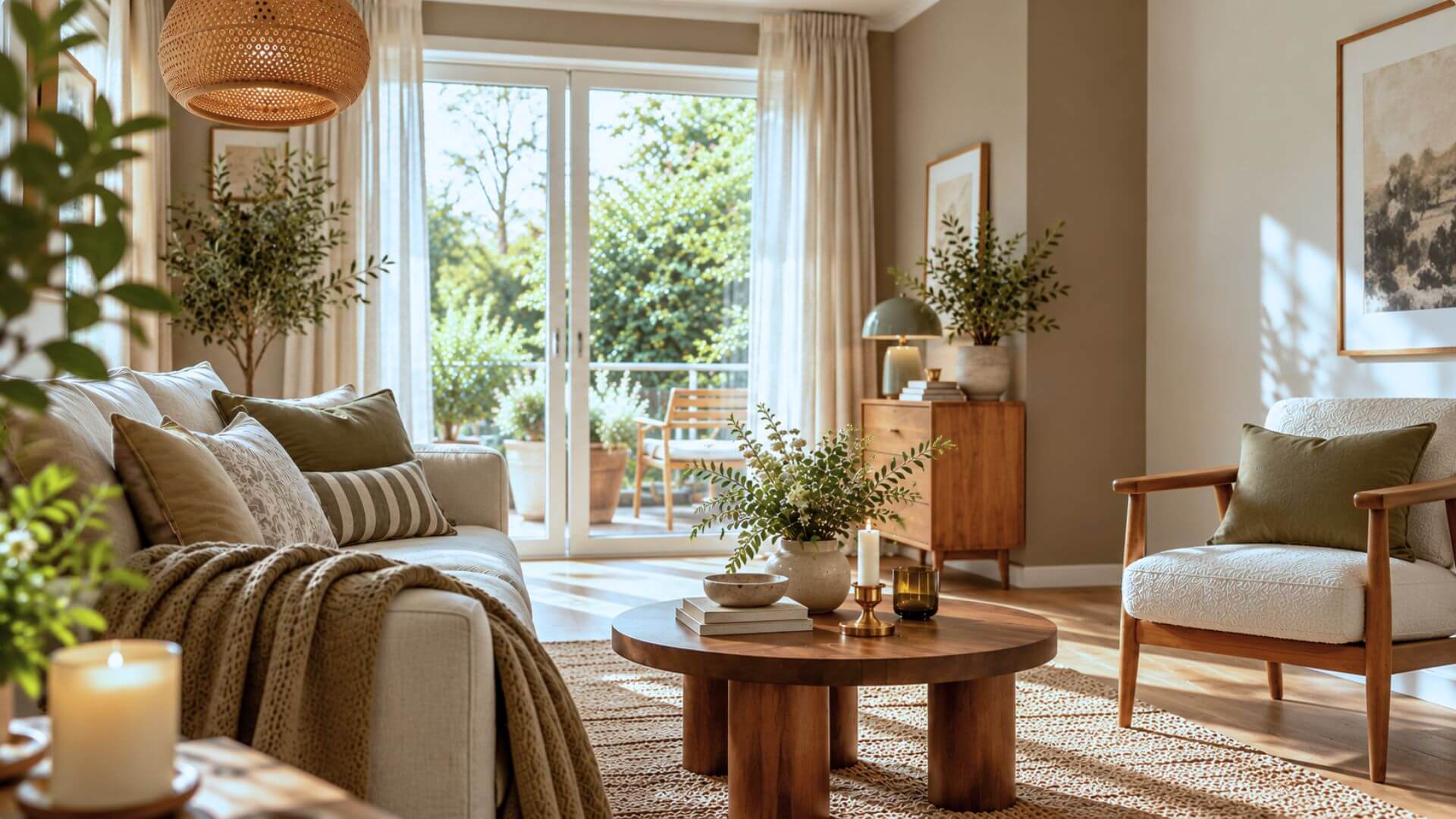
7. Create a Focal Point With Something You Already Own
Estimated budget: $0–$100
A room doesn’t always need more decoration. Sometimes, it needs a clearer point of interest.
Look around your home.
Perhaps you own a beautiful painting that has never found the right place. A large mirror hidden in a bedroom. An interesting ceramic vase. Or a vintage piece that deserves more attention.
Instead of scattering decorative objects throughout the room, try giving one meaningful piece a prominent position.
A large artwork above the sofa can help anchor the seating area.
A mirror placed where it reflects daylight can brighten a darker part of the room.
A favorite vintage object on an otherwise uncluttered sideboard can bring personality to a modern space.
For a subtle Nordic look, surround your focal point with enough breathing room that it can be appreciated.
The Nordic touch: Choose something that means something to you. A home becomes more beautiful when it reflects the people who live there.
How Much Does a Small Home Makeover Really Cost?
You don’t need to tackle all seven ideas at once.
In fact, choosing just two or three can create a more cohesive result than making several unrelated changes.
Here are three illustrative DIY makeover budgets.
| Budget | What you could change |
|---|---|
| Under $100 | Rearrange furniture, restyle a corner, and add a small lamp or textile |
| Around $250 | Paint an accent wall, improve lighting, and add a textured throw |
| Around $500 | Refresh a wall, update lighting, add textiles, and create a reading corner |
These are planning examples, not fixed project quotes. Costs depend on room size, materials, location, existing furniture, and whether professional labor is needed.
The important question isn’t how much you can change.
It’s which changes will have the greatest effect on how your home looks, feels, and functions.
The Nordic Secret: Change Less, Notice More
A beautiful home doesn’t need to look perfect.
It doesn’t need expensive furniture, matching collections, or a complete renovation every time your tastes change.
Often, the most welcoming spaces are the ones that feel thoughtfully assembled over time.
A warm wall color. A favorite chair beside the window. Soft lighting in the evening. A piece of furniture with a story.
These are small things, but together they create something meaningful.
And perhaps that’s the most useful lesson we can borrow from Nordic living:
A home doesn’t have to be completely transformed to feel completely different.
Start with one change. Live with it for a while. Then decide what your home actually needs next.
Frequently Asked Questions
What home updates make the biggest difference on a small budget?
Painting, improving lighting, rearranging furniture, and adding texture are among the most accessible ways to refresh a home. Start by identifying what feels uncomfortable or visually unbalanced before purchasing anything new.
Is painting an accent wall worth it?
An accent wall can be a worthwhile DIY project when it improves the room’s color balance or creates a natural focal point. For a timeless look, consider muted shades that complement your existing furniture and flooring.
How can I make my home look more expensive without remodeling?
Focus on furniture proportions, layered lighting, a cohesive color palette, and thoughtful placement of artwork. A well-balanced room can look sophisticated without expensive furniture.
How do I add Nordic style to an American home?
Start with warm neutrals, natural materials, functional furniture, and soft lighting. Keep the comfort and personality of your American home while introducing Nordic-inspired simplicity and balance. Scandinavian design principles can be a useful starting point, but there’s no need to make the room strictly minimalist.
What should I update first in my living room?
Begin with the issue that affects the room most: uncomfortable furniture placement, poor lighting, or an unbalanced color scheme. Changes that solve a real problem usually offer more lasting value than purely decorative purchases.