
A small living room can have just as much personality as a larger space — sometimes even more.
It can feel soft and traditional, warm and organic, clean and Scandinavian, collected and eclectic, or sophisticated and urban. The key isn’t simply making the room look bigger. It’s choosing furniture, colors, textures, and details that make every inch feel intentional.
These five small living rooms show just how much style can fit into a compact space.
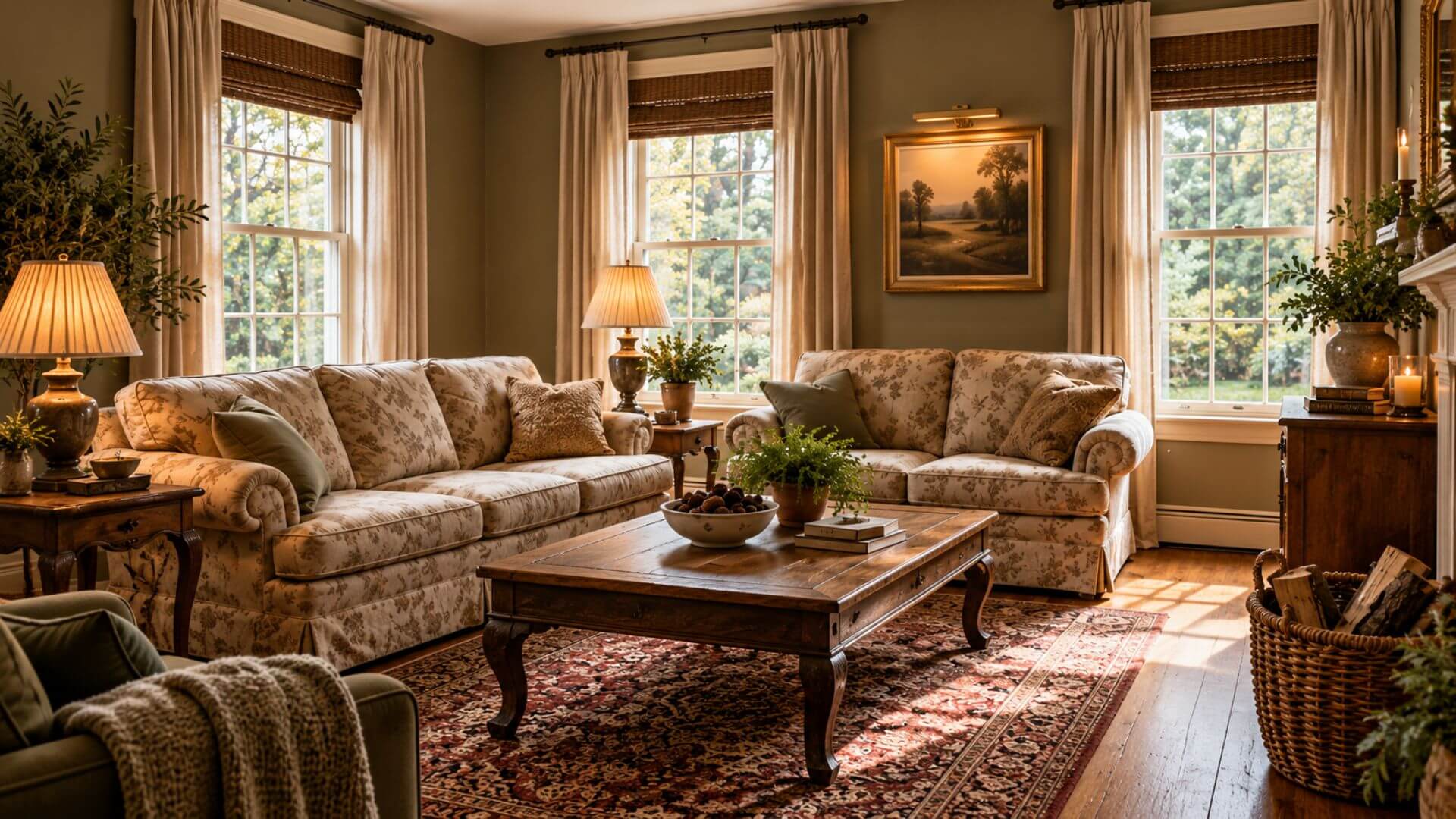 1. Soft Country: Keep It Cozy, Not Crowded
Soft country style works beautifully in a small living room because it doesn’t rely on perfect symmetry or large statement furniture to create character.
A compact sofa, warm wood, subtle pattern, vintage-inspired details, and a few carefully chosen accessories can make a smaller room feel welcoming rather than cramped.
The secret is restraint.
Instead of filling every corner, choose a few pieces that bring warmth and personality. A floral or softly patterned fabric can become part of the room’s character, while natural wood adds depth without making the space feel overly formal.
Even a fireplace can work beautifully in a compact room when the furniture around it remains appropriately scaled.
Small-space idea: Let one or two traditional details create the mood rather than trying to fill the room with decorative pieces.
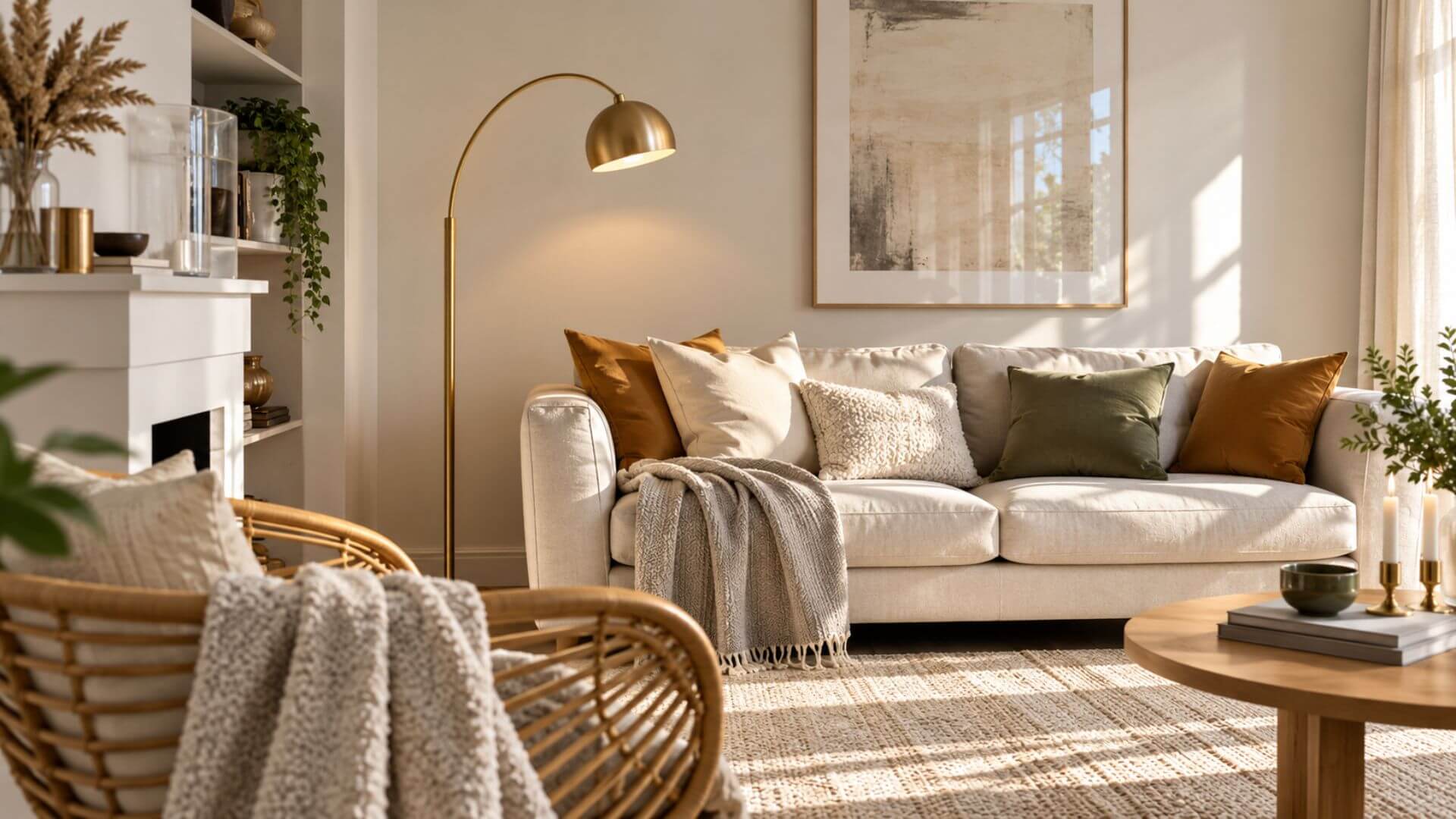 2. Organic Modern: Layer Natural Materials
Organic modern interiors are particularly well suited to smaller living rooms because much of their character comes from texture rather than clutter.
A warm neutral sofa creates a quiet foundation, while rattan, natural wood, woven textiles, and softly textured fabrics add depth.
Instead of introducing many different colors, allow the materials themselves to provide contrast.
A rattan chair beside an upholstered sofa, for example, feels visually lighter than adding another bulky upholstered seat. A round wooden coffee table introduces another natural material while softening the straight lines of the room.
Warm metallic details can work beautifully here too. A slim brass floor lamp adds height and a subtle glow without requiring much floor space.
If you love this calm, earthy palette, explore our Best Natural Color Sofas for more warm beige, brown, taupe, and neutral sofa ideas.
For lighting inspiration, see our Best Floor Lamps for Living Rooms.
Small-space idea: When the color palette is simple, layer different natural textures to keep the room interesting.
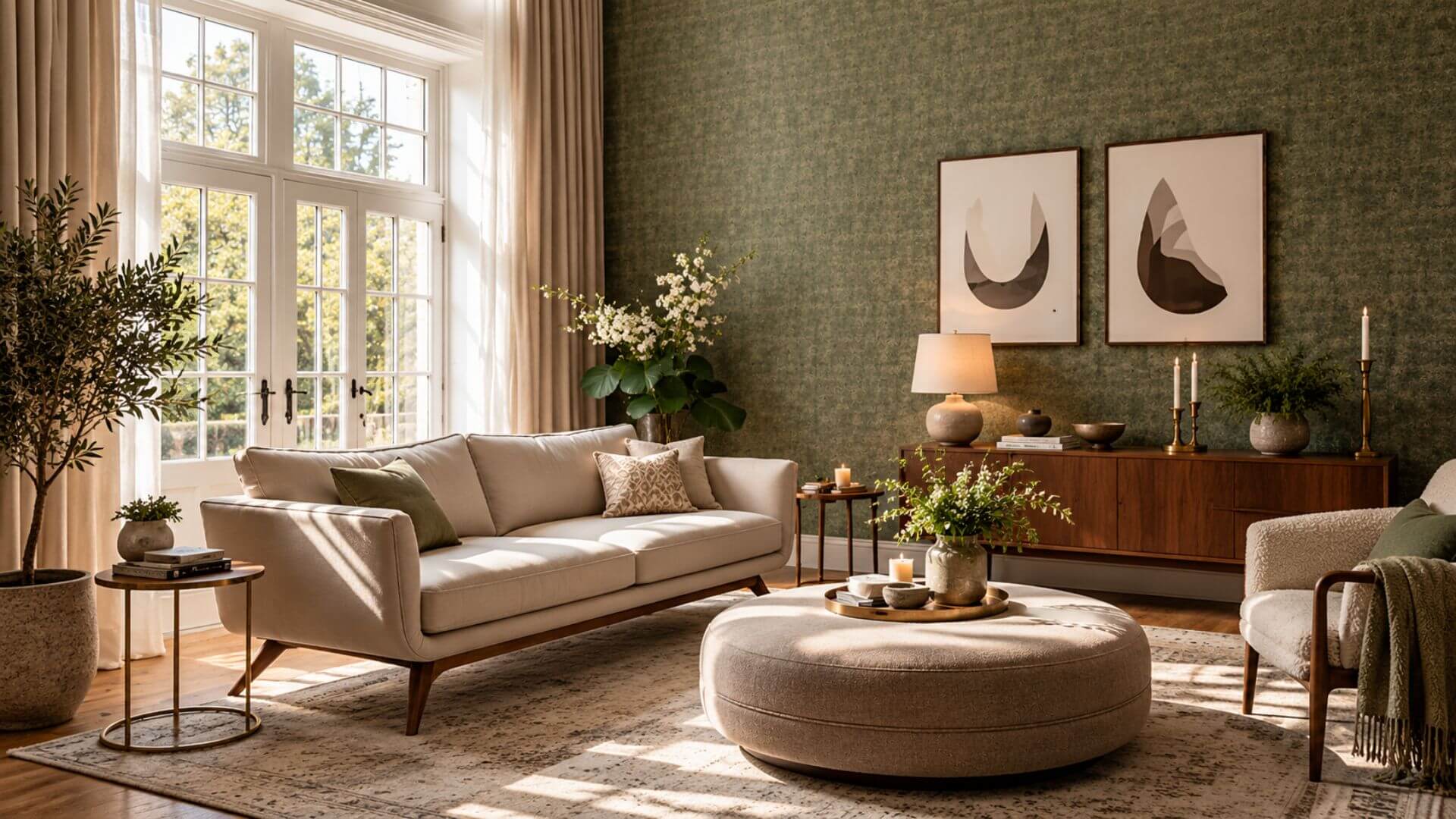 3. Scandinavian Modern: Use Lightness and Contrast
Scandinavian modern design is a natural fit for a small living room, but it doesn’t have to mean an all-white interior.
A muted green wall can give a compact room surprising depth, especially when it is balanced with a light sofa, pale flooring, and plenty of natural daylight.
Furniture proportions matter here.
A sofa raised on visible legs allows more of the floor to remain visible, making the piece feel lighter. Slim side tables provide useful surfaces without taking over the seating area, while a large round ottoman can soften a room dominated by straight architectural lines.
Long curtains also draw the eye upward and emphasize the height of the room rather than its limited floor area.
The result feels calm and structured without feeling empty.
If your small living room needs an occasional table without adding unnecessary visual weight, see our Best Accent Tables for Living Rooms, including compact and narrow options designed for tighter spaces.
Small-space idea: Look for furniture that leaves some floor visible. Raised legs, narrow profiles, and visually light pieces can make a compact layout feel more open.
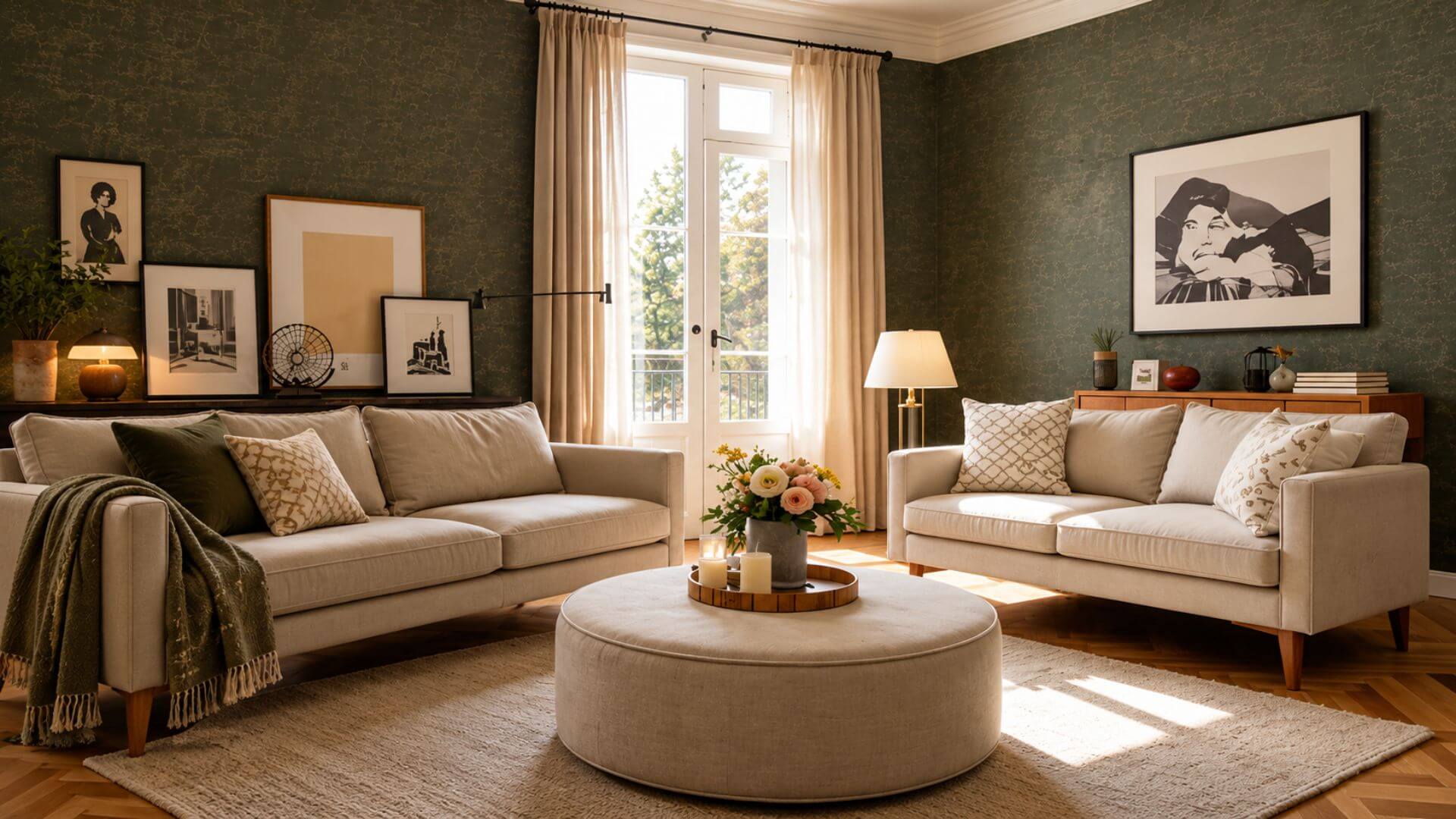 4. Mid-Century Eclectic: Give the Walls Personality
Small rooms don’t need to be minimal.
In fact, a compact living room can be an ideal place to create a more collected interior — as long as the larger furniture remains relatively simple.
Mid-century-inspired furniture provides a strong foundation. Clean-lined sofas, tapered wooden legs, warm wood furniture, and simple lamps create structure, while art brings personality.
This is where an eclectic approach becomes especially useful.
Instead of adding more furniture to make the room interesting, use the walls. Mix graphic artwork, photography, vintage-inspired pieces, or objects that mean something to you.
The contrast between a restrained furniture layout and a more expressive art collection can make a small living room feel distinctive without sacrificing valuable floor space.
A compact armchair can also introduce another shape, fabric, or era without requiring a matching furniture set. See our Best Armchairs for Living Rooms for ideas ranging from compact accent chairs to more sculptural designs.
Small-space idea: When floor space is limited, let your walls do more of the decorating.
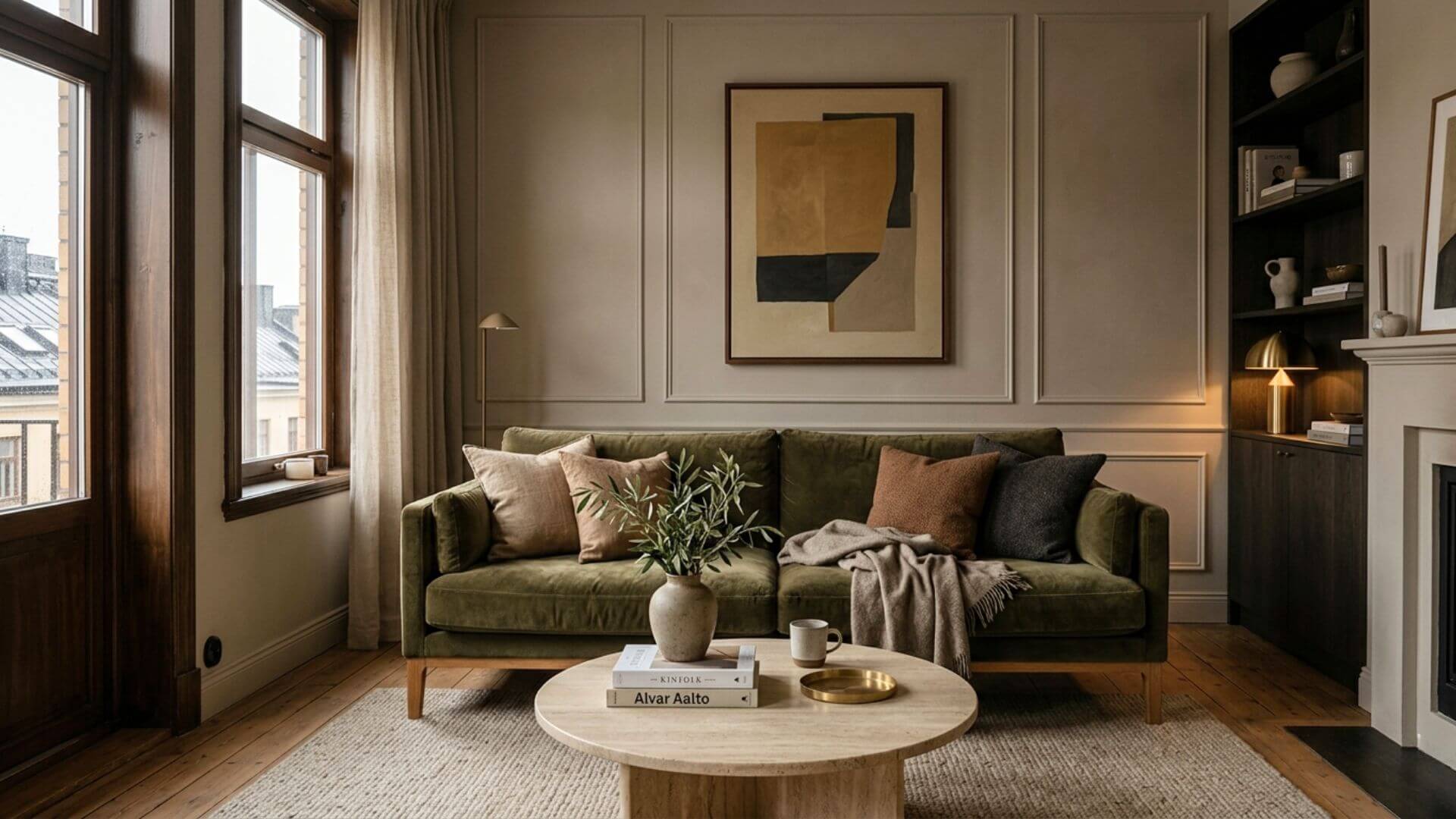 5. Modern City Classic: Mix Old Architecture With Modern Pieces
A small city living room can feel sophisticated without being large.
One of the most interesting combinations is classic architecture paired with contemporary furniture and art.
A traditional fireplace, architectural moldings, built-in shelving, and warm wood can give the room a sense of history. Against that backdrop, a deep olive sofa or chair, modern artwork, design books, and sculptural lighting keep the space from feeling overly traditional.
The contrast is what makes the room work.
You don’t need to choose between classic and modern. In an older apartment, preserving architectural character while introducing cleaner contemporary pieces can create a much richer interior.
Built-in shelving is particularly valuable in a smaller city home because it uses vertical space for books and objects without adding another freestanding piece of furniture.
Small-space idea: Treat original architectural features as part of the design rather than something that needs to be disguised.
What All Five Small Living Rooms Get Right
Although these rooms have very different personalities, they share several smart design principles.
Choose Furniture That Fits the Room
A beautiful sofa can still overwhelm a small living room if its proportions are wrong.
Before buying, look at the actual width and depth rather than simply whether a sofa is described as a two-seater or three-seater. Compact loveseats, sofas with slimmer arms, and designs raised on legs can preserve more visual and physical space.
If you’re looking for a neutral foundation, our Natural Color Sofa Guide includes a compact loveseat option specifically suited to smaller spaces.
Mix Visual Weight
Not every piece of furniture should feel equally substantial.
If your sofa is visually solid, balance it with a slim floor lamp, an open-legged side table, or a lighter chair. If most of your furniture is angular, introduce one round element such as an ottoman, coffee table, or accent table.
This creates contrast while helping the room breathe.
Don’t Automatically Choose the Smallest Rug
One of the easiest mistakes in a compact living room is assuming that a tiny room needs a tiny rug.
A rug should help connect the seating area rather than leave every piece of furniture visually floating around it.
Our complete guide to Choosing the Right Living Room Rug Size explains several layouts, including options for smaller living rooms.
Use Lighting as Part of the Layout
A floor lamp does more than provide light.
It can add height beside a low sofa, define a reading corner, or bring a sculptural element into an otherwise simple room. In a compact space, this makes lighting part of the design rather than an afterthought.
The best solution is often layered lighting: natural daylight during the day, supplemented by floor and table lamps that create softer pools of light in the evening.
Leave Some Space Empty
Perhaps the most important small-room principle is also the simplest: not every available space needs to be filled.
A little breathing room around furniture allows individual pieces to stand out and makes movement through the room easier.
This idea is also central to creating a balanced interior. For more on proportion, texture, lighting, and visual breathing room, see our guide to Creating a Harmonious Living Room.
Which Small Living Room Style Is Yours?
A small living room can be just as expressive as a large one.
Soft Country brings warmth and nostalgia. Organic Modern relies on natural materials and tactile layers. Scandinavian Modern combines simplicity with subtle contrast. Mid-Century Eclectic makes room for art and personality. Modern City Classic brings together architectural character and contemporary design.
You don’t have to follow any one style perfectly.
Take the element you love most from each room — perhaps the natural textures, slim-legged furniture, expressive artwork, muted green walls, or layered lighting — and use it to create a small living room that feels like your own.
Because the best small spaces don’t simply look bigger.
They make every square foot feel considered.