Warm Minimalist Living Room Ideas: The Secret Is Adding More, Not Less
Warm minimalism may sound like it’s all about having less, but the most inviting spaces often do the opposite. They add more — just not more clutter.
The secret is layering the right things: natural textures, warm materials, soft lighting, organic shapes, and personal details that make a room feel lived-in. A cream sofa and neutral walls can create a beautiful foundation, but without these layers, the space can easily feel flat or unfinished.
A warm minimalist living room keeps the calm, uncluttered feeling of minimalism while replacing starkness with comfort. Think warm wood, linen, wool, softly aged pieces, and several gentle sources of light rather than perfectly smooth surfaces and one bright overhead fixture.
The goal isn’t to fill the room. It’s to give a simple room more depth, warmth, and personality.
That’s the unexpected side of warm minimalism: sometimes, the way to make a space feel calmer is to add more of the right things.
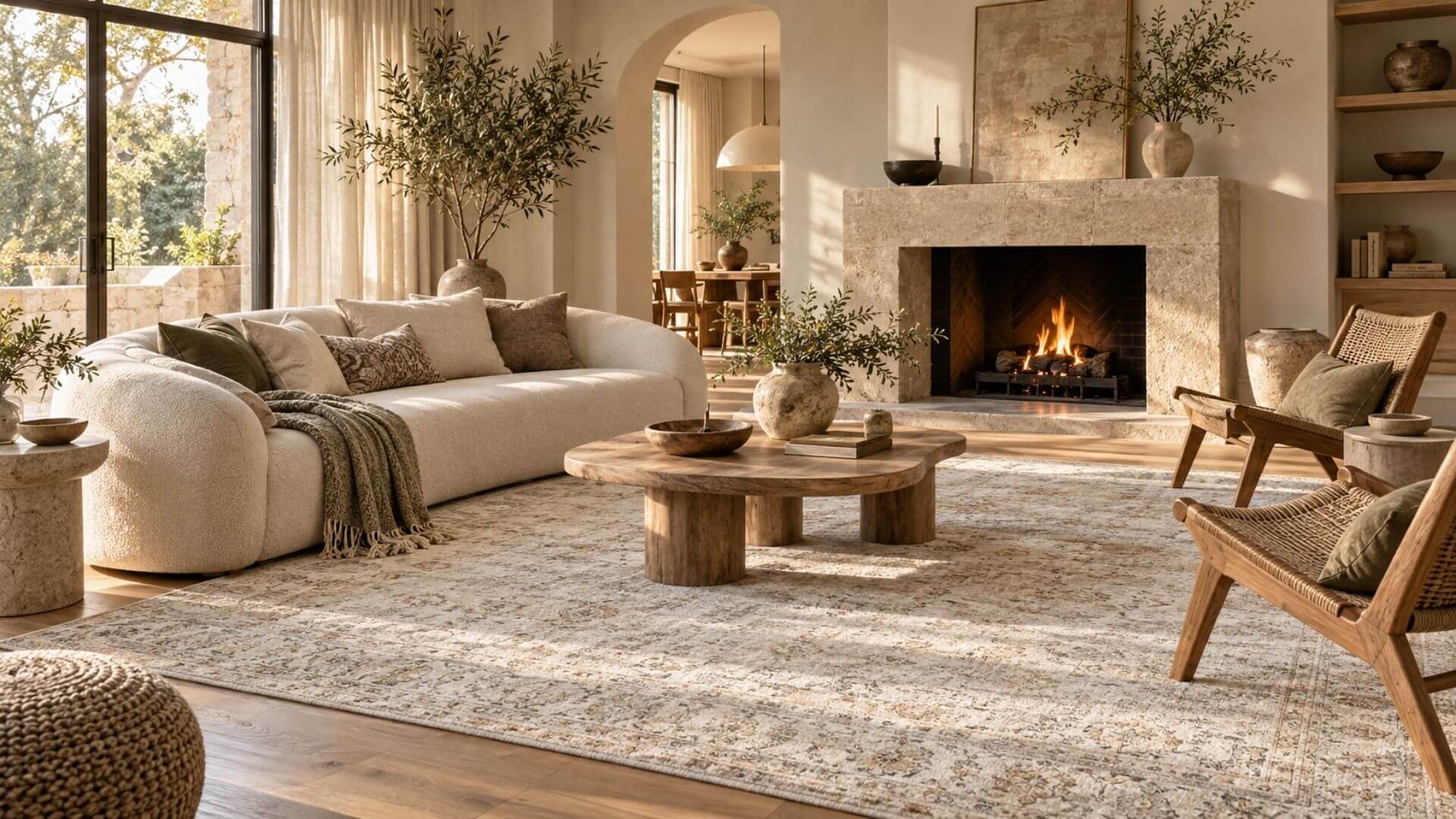
1. Start With a Warm Neutral Color Palette
Warm minimalism begins with color, but that doesn’t mean covering the entire room in the same shade of beige. The most inviting neutral spaces combine several soft, warm tones to create subtle contrast and depth.
Start with warm white, cream, beige, taupe, mushroom, or soft brown as your foundation. Then introduce a small amount of a muted natural color, such as sage or olive green, to keep the room feeling fresh and connected to nature.
The key is to layer tones rather than trying to match everything perfectly. A cream sofa against warm white walls, for example, can be paired with a taupe rug, natural wood furniture, and a few muted green accents. The palette remains calm, but the room feels richer and more intentional.
This is where the idea of adding more, not less begins: more tonal variation creates warmth without adding visual clutter.
2. Choose a Comfortable Sofa as the Foundation
In a warm minimalist living room, the sofa often becomes the visual anchor of the entire space. It should feel simple and calm, but never cold or overly formal.
Instead of automatically choosing pure white, consider softer shades such as oatmeal, warm beige, taupe, soft gray, or even cognac brown. These colors bring more depth to a neutral room while remaining easy to combine with natural wood, textured rugs, and earthy accents.
Shape matters too. A low-profile sofa with generous cushions or softly rounded edges can make a minimalist room feel more relaxed and inviting. The goal is not to choose the most minimal-looking sofa possible, but one that gives the room a sense of comfort without adding unnecessary visual weight.
And this is another place where more can actually mean better: a little more softness, a little more texture, and a little more warmth can make a simple sofa feel much more at home in the space.
If you’re looking to bring this same calm and balanced feel into your living room, see these natural color sofas for inspiration.
3. Use a Large Rug to Ground the Room
A large rug can completely change the way a minimalist living room feels. Instead of sitting like a separate decorative piece in the center of the floor, the right rug connects the sofa, chairs, and coffee table into one cohesive seating area.
One of the most common mistakes is choosing a rug that is too small. When the furniture sits entirely outside the rug, the room can feel fragmented. A larger rug — ideally with at least the front legs of the sofa and chairs resting on it — creates a stronger visual foundation and can even make the room feel more spacious.
For warm minimalism, look beyond perfectly plain rugs. A softly distressed vintage-style rug, subtle pattern, or visible woven texture can bring character to an otherwise simple room without making it feel busy.
This is another example of adding more without adding clutter. More texture and a slightly larger scale can actually make the entire room feel calmer and more connected.
For more inspiration, explore our guide to the best large rugs for living rooms.
4. Bring in Natural Materials
Natural materials are what give warm minimalism its sense of warmth and authenticity. Even a very simple room can feel inviting when it includes materials such as wood, linen, wool, rattan, stone, and ceramics.
The key is to mix them rather than relying on one matching furniture collection. A warm wood coffee table can sit beside a linen sofa, while a wool rug, woven chair, or handmade ceramic vase adds another layer of texture. The pieces don’t need to match perfectly — they simply need to share a natural, understated feel.
Small variations are part of the appeal. Visible wood grain, slightly irregular ceramics, woven fibers, and softly textured fabrics prevent a neutral room from looking too polished or predictable.
Try to think in terms of layers rather than sets. When different natural materials appear throughout the room, they create depth and character while allowing the overall design to remain simple.
In warm minimalism, adding more materials doesn’t necessarily create more visual noise. When the colors stay calm, a richer mix of natural textures can actually make the room feel more balanced and complete.
5. Add Organic Shapes
Warm minimalism works best when clean lines are balanced with softer, more organic forms. Too many straight edges and boxy pieces can make a neutral living room feel rigid, even when the colors themselves are warm.
Introduce curves through a round or irregular coffee table, a softly shaped armchair, a curved sofa, or sculptural ceramics. Even one or two rounded pieces can soften the architecture of the room and create a more natural flow between furniture.
You don’t need every piece to be curved. In fact, the contrast is what makes organic shapes effective. A round wood coffee table in front of a simple linear sofa, for example, adds movement while keeping the overall look calm and uncluttered.
Natural materials make these shapes feel even warmer. Look for wood with rounded edges, stone with an irregular surface, hand-shaped ceramics, or woven pieces with gentle curves.
Once again, the idea is not to add more furniture. It’s to add more variation in shape — just enough to make a minimalist room feel softer, more relaxed, and more human.
For inspiration, explore our guide to the best coffee tables for living rooms.
6. Layer the Lighting
Lighting has a huge influence on how warm and inviting a minimalist living room feels. Even a beautifully designed neutral space can feel flat or cold if it relies on a single bright ceiling light.
Instead, create layers of light at different heights. Combine soft ambient lighting with more focused task lighting and a few subtle accent lights. A floor lamp beside the sofa or armchair, a table lamp on a side table, and gentle indirect lighting can make the room feel noticeably softer in the evening.
The temperature of the light matters too. Warm, diffused light works especially well with beige, cream, natural wood, and other earthy tones, bringing out their warmth rather than washing them out.
Think of lighting as part of the decor rather than simply something functional. A sculptural floor lamp or softly glowing linen shade can introduce another shape, texture, and focal point without adding clutter.
This is one area where adding more really does work. Instead of one strong source of light, several softer sources create depth, atmosphere, and a much more comfortable living room.
For more ideas, explore our guide to the best floor lamps for living rooms.
7. Add Texture Instead of More Color
A neutral living room doesn’t need more color to feel interesting. Often, what it really needs is more texture.
Layer materials such as bouclé, linen, wool, woven fibers, natural wood, and soft knits to create depth while keeping the color palette calm. A textured rug, linen curtains, a chunky throw, or a few tactile cushions can make beige and cream tones feel much richer without introducing visual clutter.
The most effective rooms combine different textures rather than repeating the same smooth finish everywhere. Pair a soft sofa with a slightly rougher woven rug, smooth ceramics with visible wood grain, or a structured armchair with a relaxed linen cushion.
Keep the variations subtle. You don’t need every surface to have a different texture — a few carefully chosen contrasts are enough to make the room feel layered and inviting.
This is perhaps the clearest example of the “more, not less” idea behind warm minimalism: add more texture, not more stuff. The room stays simple, but it no longer feels flat or unfinished.
8. Mix Modern Pieces With a Few Vintage Elements
A warm minimalist living room doesn’t have to look brand new. In fact, adding one or two vintage or aged pieces can make a simple space feel more personal and collected over time.
The contrast works beautifully: pair a clean-lined sofa with a vintage-style rug, place an older wooden side table beside a modern armchair, or add handmade ceramics with slightly imperfect shapes. These pieces introduce history and character without changing the calm overall aesthetic.
The key is restraint. You don’t need to fill the room with antiques. One distinctive piece can be more effective than several decorative objects, especially when it contrasts gently with newer furniture.
Look for materials and finishes that age well, such as warm wood, worn leather, aged brass, natural stone, or softly distressed textiles. Their subtle imperfections help prevent a neutral interior from feeling too polished or showroom-like.
The result should feel collected, not decorated all at once. That small sense of history is often exactly what makes warm minimalism feel like a real home rather than a perfectly styled room.
For more inspiration, explore our guide to the best armchairs for living rooms.
9. Keep Decor Simple but Personal
Warm minimalism isn’t about removing every decorative object. A room can be beautifully uncluttered and still include books, ceramics, artwork, plants, candles, and meaningful objects that give it personality.
Instead of filling every surface, choose a few pieces that add something to the room. A handmade vase on the coffee table, a small stack of favorite books, a branch in a simple ceramic vessel, or a piece of art you genuinely love can make the space feel much more personal.
Leave some surfaces and areas intentionally open. This negative space gives individual objects room to breathe and helps maintain the calm feeling that makes minimalism appealing in the first place.
Plants are especially useful in a warm neutral interior. Their natural shapes and soft greens introduce life and contrast without disrupting the restrained color palette.
The goal is to find a balance between too empty and too styled. Keep what feels useful, beautiful, or meaningful — and give those pieces enough space to be noticed.
Warm minimalism feels most inviting when the room tells you something about the people who live there. The finishing touch isn’t more decor — it’s more personality.
How to Make a Warm Minimalist Living Room Feel Cozy
A warm minimalist living room feels cozy when simplicity is balanced with texture, natural materials, soft lighting, and personal details. The goal is not to add more furniture or decoration, but to give the pieces already in the room more warmth and depth.
Start with a calm neutral palette, then layer in natural wood, linen, wool, woven textures, and a few organic shapes. Use several soft light sources instead of relying on one bright overhead fixture, and allow a small number of meaningful or vintage pieces to bring character to the space.
Most importantly, don’t try to make everything match perfectly. Warm minimalism works best when a room feels collected, comfortable, and lived-in — while still leaving enough open space to feel calm.
Frequently Asked Questions About Warm Minimalist Living Rooms
What is warm minimalism in interior design?
Warm minimalism combines the simplicity and uncluttered feeling of minimalism with warmer colors, natural materials, soft textures, and personal details. The result is a space that feels calm without feeling cold or empty.
What colors work best in a warm minimalist living room?
Warm white, cream, beige, taupe, mushroom, soft brown, and muted earthy shades work particularly well. Small touches of sage, olive, terracotta, or other subdued natural colors can add depth while keeping the palette peaceful.
How do you make a beige living room look less boring?
Instead of adding lots of new colors, introduce variation through texture and materials. Linen, wool, wood, stone, ceramics, woven fibers, and subtle patterns can make a neutral room feel layered and interesting.
What materials work best for warm minimalist interiors?
Natural materials such as wood, linen, wool, stone, rattan, and ceramics are especially effective because they introduce subtle variations in texture and tone without making the room feel busy.
Can a warm minimalist living room still have color?
Absolutely. Warm minimalism doesn’t require an entirely neutral room. Muted greens, earthy browns, dusty blues, or soft terracotta can work beautifully when used selectively alongside a calm neutral foundation.
Final Thoughts
Warm minimalism isn’t really about having as little as possible. It’s about being more intentional with what you bring into the room.
A little more texture, warmth, softness, natural material, and personality can make a simple living room feel far more inviting without sacrificing the calm atmosphere that makes minimalism so appealing.
So if your neutral living room feels flat or unfinished, the answer may not be to remove something.
Try adding more — just make sure it’s more of the right things.