
There is something irresistible about 1930s interiors. Curved furniture, polished wood, beautiful lighting, rich fabrics and just the right amount of glamour made rooms feel sophisticated without relying on excess.
And nearly a century later, many of those ideas feel surprisingly current.
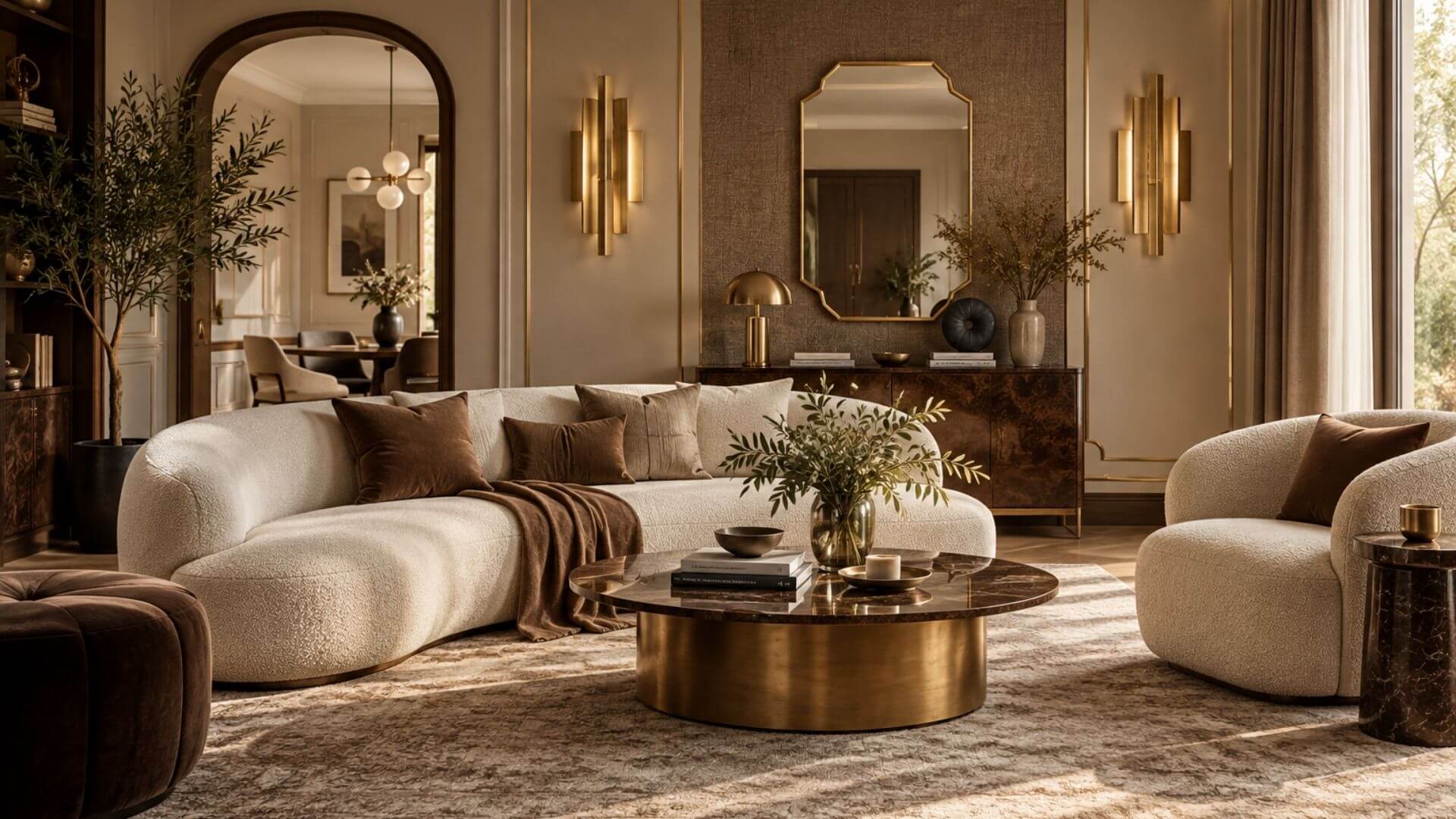
Curved sofas and armchairs are everywhere again. Warm woods are replacing cooler finishes. Statement lighting has become an important part of decorating, while chrome, brass, glass and deeper colors are finding their way back into otherwise neutral homes.
You don’t need to recreate a 1930s room to capture the feeling.
The most beautiful way to bring the era home today is to borrow its best ideas — the curves, contrast, craftsmanship and glamour — and mix them with the simplicity of modern living.
Here is how to do it.
 What Defined 1930s Interior Design?
When we think of glamorous 1930s interiors, Art Deco immediately comes to mind.
The style had emerged in the previous decade, but its influence continued strongly into the 1930s. Interiors celebrated geometry, symmetry, luxurious materials and beautifully designed objects. Mirrors, glass, polished woods and metallic finishes helped rooms play with light.
At the same time, another influence was becoming increasingly visible: Streamline Moderne.
Where Art Deco could be angular and decorative, Streamline Moderne introduced softer curves, horizontal lines and smooth, aerodynamic forms. Those rounded silhouettes are one reason 1930s design can translate so beautifully into today’s homes.
Some of the era’s most recognizable interior elements include:
- curved and streamlined furniture
- walnut and other rich wood tones
- velvet and tactile upholstery
- geometric patterns
- glass and mirrored surfaces
- brass and chrome details
- sculptural lighting
- sophisticated, deeper colors
The key to using them today is restraint.
You don’t need all of these elements in one room. In fact, choosing just a few often creates a much more convincing modern interpretation.
1. Start With Curves
If there is one 1930s idea that feels completely at home in contemporary interiors, it is the curve.
Rounded sofas, barrel chairs, sweeping armrests and oval tables soften the straight architectural lines found in many modern homes. They also make a room feel more inviting.
A single curved armchair can be enough to introduce the influence of the era without making the room look retro.
For a subtle interpretation, pair a sculptural chair with a simple sofa, warm neutral rug and contemporary lighting. The contrast allows the shape of the chair to become the focal point.
Curves don’t have to match, either. An oval coffee table can sit beautifully alongside a softly rounded sofa or chair.
The goal isn’t to recreate the 1930s. It’s to let one of its most beautiful design ideas work in a modern room.
2. Bring Back Rich, Dark Wood
For years, very pale woods dominated many contemporary interiors. But deeper wood tones can bring something a light neutral room sometimes lacks: depth.
Walnut is particularly beautiful for a 1930s-inspired interior.
You don’t need a room filled with dark furniture. One walnut coffee table, side table or console can provide enough contrast against cream, beige or warm white upholstery.
Dark wood also works beautifully with the curved forms associated with the period. Look for rounded edges, fluted details or furniture with an elegant, slightly sculptural silhouette.
If your room is mostly light, this is an easy way to add character without adding more color.
3. Add a Touch of Brass, Chrome or Glass
1930s interiors knew how to use shine.
Metallic surfaces, glass and mirrors reflected light and brought glamour into a room — but a contemporary interpretation doesn’t need to sparkle from every corner.
A brass lamp beside a neutral sofa can be enough.
So can a chrome accent table, a glass coffee table or an elegant mirror.
Chrome creates a cooler, sharper look, while aged or softly brushed brass brings warmth. Both can work with 1930s-inspired design.
The secret is not to use more Art Deco.
It’s to choose the right Art Deco details.
When the rest of the room is relatively simple, one beautiful metallic element feels intentional rather than theatrical.
4. Make Lighting Part of the Design
Lighting in a 1930s-inspired room shouldn’t disappear into the background.
This was an era that understood the decorative power of a lamp.
Opal glass globes, stepped geometric shapes, polished metal and elegant floor lamps can all introduce a subtle Art Deco reference. Even a simple contemporary lamp can work if its proportions and materials feel sculptural.
Try thinking about lighting in layers.
Combine a ceiling fixture with a floor lamp and a smaller table lamp rather than relying on one strong overhead light. In the evening, those smaller pools of light create the intimate, sophisticated atmosphere that suits this style particularly well.
A beautiful lamp should still look interesting when it isn’t switched on.
5. Use Geometric Patterns — Carefully
Geometry is one of the easiest ways to recognize Art Deco.
Fan shapes, arches, stepped patterns, diamonds and repeated lines appeared throughout the period.
But this is also one of the easiest elements to overdo.
Instead of combining geometric wallpaper, patterned upholstery and a dramatic rug, choose one place for the pattern to live.
A rug can be particularly effective because it gives the room structure without dominating eye level.
For a quieter interpretation, look for a pattern with low contrast — perhaps cream and taupe rather than black and gold.
That small change can make a classic Art Deco idea feel remarkably contemporary.
6. Try a More Dramatic Color Palette
A 1930s-inspired room doesn’t have to be dark.
Cream, ivory, beige and warm neutrals can provide a beautiful foundation. What changes the atmosphere is the addition of one deeper, richer shade.
Try combinations such as:
Cream + walnut + deep green + brass
Warm beige + burgundy + dark wood
Ivory + chocolate brown + chrome
Soft taupe + muted teal + walnut
These palettes give you contrast without turning the room into a themed interior.
Deep green is particularly effective because it works beautifully with warm wood and metallic details. Burgundy can create a richer, more dramatic atmosphere, while chocolate brown offers a quieter way to achieve the same sense of depth.
And there is no requirement for black and gold.
Art Deco was far more interesting than that familiar combination suggests.
7. Add One Statement Piece
Perhaps the simplest way to experiment with 1930s style is to forget about decorating the entire room.
Choose one exceptional piece instead.
It could be a sculptural armchair.
A beautiful geometric mirror.
An unusual accent table.
A globe floor lamp.
A curved console.
Or even a vintage-inspired object that simply makes you stop and look.
Surrounding that piece with quieter furniture gives it space to become special.
This approach is also useful if your home already has an established style. You don’t have to replace what you own to introduce another era.
Sometimes one object is enough to change the personality of a room.
8. Mix 1930s Glamour With Modern Minimalism
This is where the look becomes especially interesting.
Art Deco and modern minimalism may sound like opposites. One is associated with glamour and decoration; the other with simplicity.
But look a little closer and they share some important qualities.
Both appreciate strong shapes.
Both can rely on carefully selected objects rather than clutter.
And both become much more beautiful when materials, proportions and lighting are given room to speak.
Imagine a contemporary cream sofa against a warm neutral wall. Add a curved walnut table, a sculptural 1930s-inspired armchair and one brass or opal-glass lamp.
Nothing else needs to announce itself as Art Deco.
This approach also works particularly well with warm minimalism, where natural materials, soft shapes and layered textures already create a comfortable foundation.
Adding one or two glamorous elements simply gives the room another layer of personality.
How to Get the 1930s Look Without Making Your Home Feel Dated
The easiest mistake is trying to make everything match the era.
Avoid it.
Instead, think in terms of 80 percent today and 20 percent 1930s inspiration.
Keep larger elements such as walls and sofas relatively timeless, then introduce the period through shape, material and detail.
A modern sofa can sit beside an Art Deco-inspired table. A simple bedroom can have an extraordinary geometric lamp. A minimalist dining space can be transformed by a curved walnut cabinet.
Vintage pieces can work beautifully too, particularly when they are surrounded by contemporary furniture rather than an entire room of period pieces.
And don’t underestimate empty space.
When a chair, lamp or table has an interesting silhouette, giving it some breathing room makes the design much more noticeable.
The result should make someone think:
“What a beautiful room.”
Not:
“This is a 1930s room.”
You Don’t Need a Time Machine
The enduring appeal of 1930s design isn’t really about nostalgia.
It’s about the confidence to make everyday objects beautiful.
A chair could have an extraordinary curve. A lamp could be almost sculptural. A small table could combine wood, glass and metal simply because the materials looked wonderful together.
That philosophy feels relevant again.
After years of very restrained interiors, we’re rediscovering character, deeper colors, warm woods and objects that don’t disappear into the background.
So perhaps the best way to bring the 1930s home isn’t to recreate the decade at all.
Borrow the curve of an armchair.
The glow of an opal glass lamp.
The depth of walnut.
A flash of brass or chrome.
And then let everything else belong completely to today.
A little 1930s glamour goes a long way.
Final Thoughts: Bringing 1930s Art Deco Style Into a Modern Home
The beauty of 1930s interior design is that you don’t need to recreate an entire Art Deco room to capture its character. Curved furniture, rich wood tones, sculptural lighting, geometric details and touches of brass or glass can bring the elegance of the era into a modern home without making it feel like a period set.
Start with one or two elements that naturally fit your space. A softly curved sofa in a warm neutral shade can create a beautiful foundation — explore our Best Natural Color Sofas for inspiration. Then add a smaller statement piece, such as one of our Best Accent Tables, to introduce shape, contrast and personality.
The most timeless way to use Art Deco style today is to balance its glamour with simplicity. Let a few distinctive 1930s-inspired details stand out against a calmer modern backdrop.
You don’t need a time machine to bring the 1930s home. Sometimes, a curve, a little warm wood and just the right touch of glamour are enough.