
Discover how thoughtful styling, better proportions, and a few simple changes can transform your living room into a more elegant, harmonious space — without buying more.
A beautiful living room isn’t necessarily the one with the most beautiful things.
Sometimes, it’s the room where every piece has space to breathe, where the eye knows where to rest, and where a few carefully chosen details create a stronger impression than dozens of decorative objects.
You might already have a lovely sofa, interesting artwork, and accessories you genuinely enjoy. Yet something about the room still feels busy, unfinished, or less sophisticated than you imagined.
The answer may not be another shopping trip.
It may be a matter of editing, rearranging, and understanding how scale, balance, and visual space work together.
The art of less isn’t about creating an empty room. It’s about making the things you love stand out.
These seven living room styling ideas show how thoughtful choices can create a more balanced, elegant space without adding more decor. From better artwork placement and rug proportions to coordinated colors and carefully styled accessories, small changes can make a surprisingly big difference.
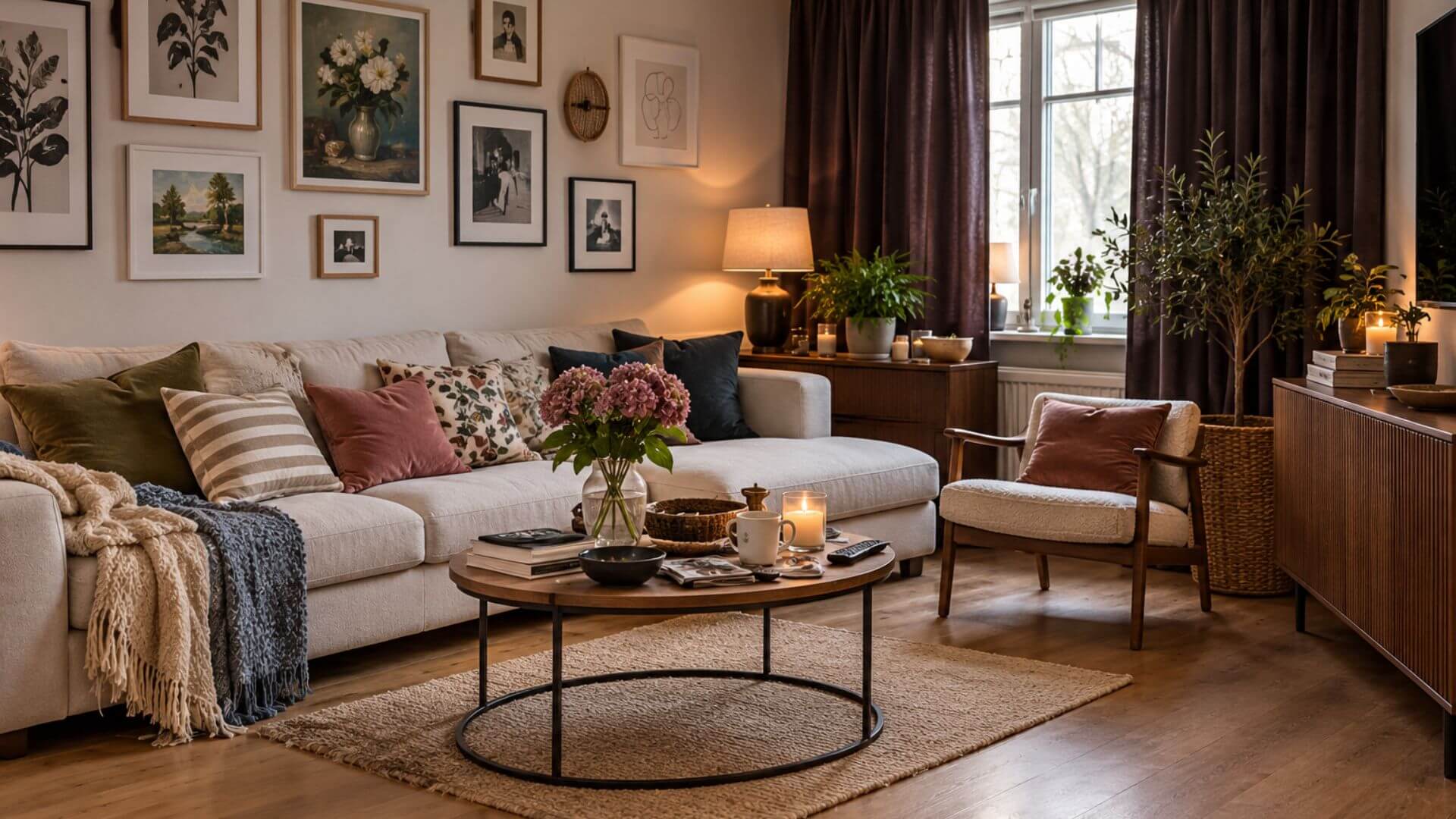
Living room before makeover with mismatched cushions, small rug, dark curtains and scattered wall art
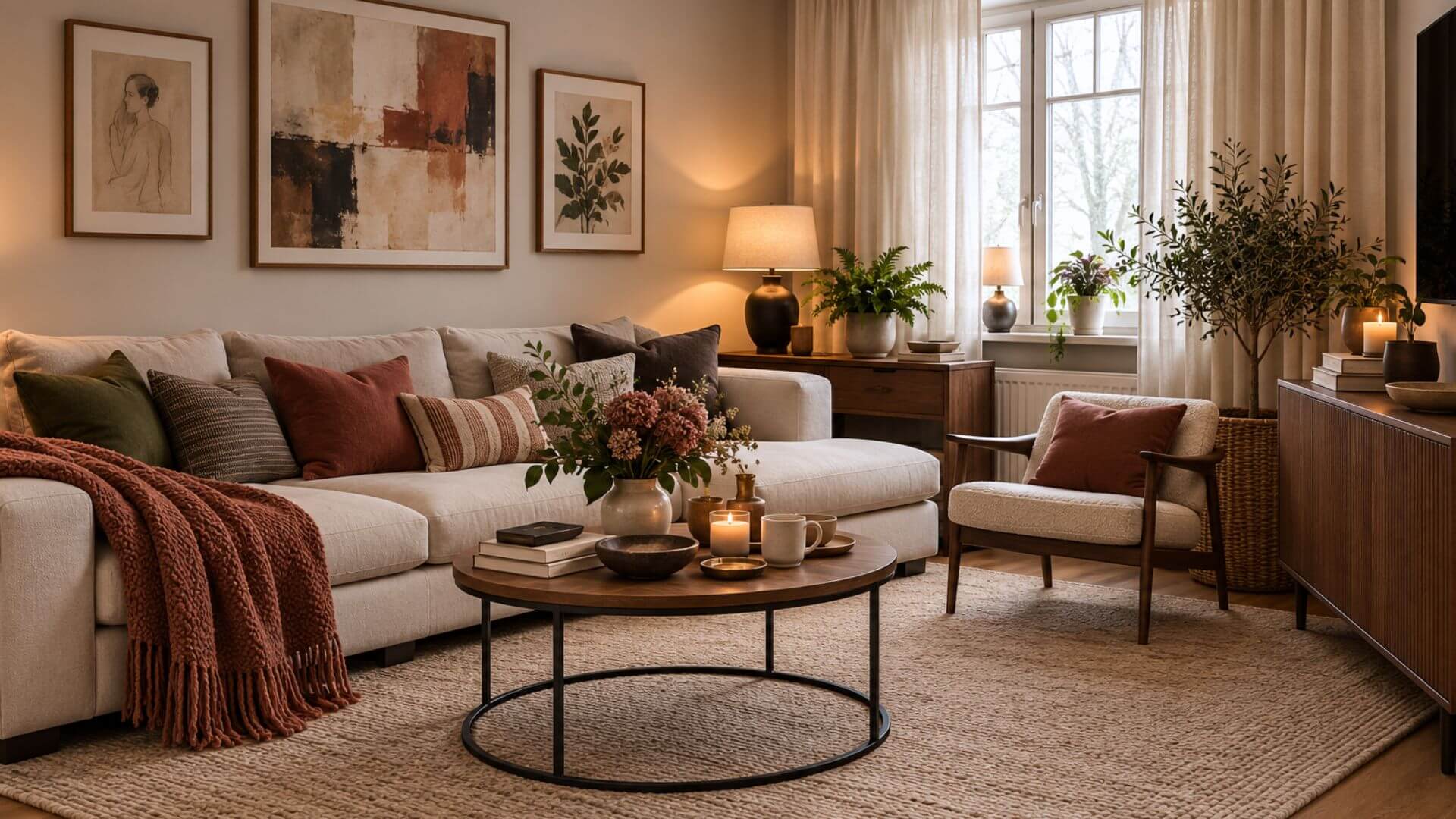
Elegant living room after makeover with coordinated artwork, warm colors, light curtains and a large textured rug
Before & After: The Power of Thoughtful Living Room Styling
Sometimes, the difference between a busy living room and a beautifully balanced one comes down to a few carefully considered changes.
Take a look at this living room transformation. The sofa, coffee table, armchair, and main furniture pieces remain the same. What changes is how the room comes together.
Before: A Beautiful Room Without a Clear Visual Connection
Before: A cozy living room with lovely individual pieces, but scattered artwork, mixed textiles, and a small rug make the space feel visually busy.
After: A More Harmonious and Elegant Living Room
After: The same living room, thoughtfully restyled with balanced artwork, a larger rug, lighter curtains, and coordinated colors for a calmer, more cohesive look.
Notice how the larger rug brings the seating area together, while carefully arranged artwork creates a more balanced focal point. Warm ivory, soft terracotta red, olive green, and rich chocolate brown connect the artwork, cushions, and decorative details.
Lighter curtains soften the window area, and a more intentional arrangement of accessories gives the room a sense of calm without sacrificing personality.
The result isn’t about having less character. It’s about creating more harmony with what you already have.
Now, let’s explore the seven styling principles behind this transformation.
1. Think Bigger, Not More: Let Your Artwork Make a Statement
One of the most common decorating challenges is choosing artwork that feels right for the room.
A collection of small pictures can be charming and deeply personal. But when frames are scattered across a large wall without a clear relationship to one another, the result may feel fragmented.
Instead of allowing each picture to compete for attention, think about the wall as one complete composition.
Try this instead
-
Choose one generously sized artwork above your sofa or sideboard.
-
Alternatively, arrange two or three complementary pieces into a cohesive composition with balanced spacing.
-
Keep the overall arrangement visually connected to the furniture below.
-
Repeat a few colors from the artwork in your cushions, throws, or other decorative details.
As a starting point, artwork above a sofa often looks balanced when the overall composition measures approximately two-thirds to three-quarters of the sofa’s width.
This isn’t a strict rule, but it can help prevent a beautiful piece from looking lost on a large wall.
The styling secret: A single oversized painting isn’t automatically more elegant than a gallery wall. What matters is scale, composition, and the relationship between the artwork and its surroundings.
2. Create One Clear Focal Point
Walk into a beautifully designed living room and notice where your eyes go first.
Perhaps it’s a striking painting, a sculptural coffee table, an elegant fireplace, or a large window framing a beautiful view.
That visual anchor is the room’s focal point.
When too many objects compete for attention, even attractive furnishings can lose their impact. A room filled with decorative statements may feel less intentional than one with a clear visual hierarchy.
How to create a focal point
Begin by identifying the strongest existing feature in your living room.
It could be a piece of furniture you already own, an architectural detail, or a favorite artwork.
Then allow the surrounding elements to support it.
If your sofa is the main feature, consider quieter accessories and artwork that complement its color and shape.
If your artwork is the star, keep nearby decorations restrained so the composition can shine.
The styling secret: Not every beautiful object needs to be the center of attention. A sophisticated room often has one leading feature and several supporting elements.
3. Give Beautiful Objects Space to Breathe
Sometimes the most effective decorating decision is removing something.
A sideboard covered with candles, framed photographs, small vases, and decorative objects may contain many lovely pieces. But when everything is displayed together, individual items become harder to appreciate.
Negative space — the intentional empty area around objects — is an important part of visual balance.
It creates breathing room, highlights beautiful shapes, and makes a composition feel more deliberate.
The sideboard experiment
Try removing everything from your sideboard.
Then return only a few favorite objects:
-
One substantial table lamp or sculptural vase.
-
A small stack of beautiful books.
-
A meaningful decorative object.
-
Perhaps a branch arrangement or fresh flowers.
Leave some of the surface completely clear.
Now step back and look at the composition from across the room.
You may discover that your favorite pieces look more striking when they aren’t surrounded by so many others.
You don’t need to get rid of the remaining decorations. Store them and rotate your favorites throughout the year.
The styling secret: Empty space isn’t wasted space. It gives your favorite objects the attention they deserve.
4. Style in Groups, Not Rows
Decorative objects often look more natural and interesting when arranged in thoughtful groups rather than evenly spaced rows.
This is especially useful when styling coffee tables, consoles, bookshelves, and sideboards.
The goal is to create a small composition with variation in height, shape, and texture.
Try the three-element approach
Start with three complementary elements:
Something tall: A vase with branches, a sculptural candleholder, or a small table lamp.
Something low: A beautiful book, shallow bowl, or decorative tray.
Something sculptural: A ceramic object, natural stone, or another piece with an interesting silhouette.
Allow the objects to overlap visually without crowding one another.
You can also use a tray to visually connect smaller items into one cohesive arrangement.
Odd-numbered groupings often feel relaxed and natural, but there is no need to follow the rule rigidly. Two carefully chosen objects can look equally beautiful.
The important thing is the relationship between them.
A simple coffee table formula
A large coffee table might need only a stack of books, a sculptural bowl, and a vase with a few branches.
The result can feel richer and more intentional than a collection of unrelated accessories.
The styling secret: Think of decorative objects as a composition, not a collection of individual items.
5. Let the Rug Anchor the Room
A rug has the power to change how an entire living room feels.
When a rug is too small for the seating area, furniture can appear disconnected. The room may feel visually divided, even when the colors and furnishings work beautifully together.
A generously sized rug creates a foundation for the arrangement.
It connects the sofa, chairs, and coffee table, helping them read as one harmonious group.
How to find the right proportions
For many living rooms, a good starting point is to choose a rug large enough for at least the front legs of the sofa and main accent chairs to rest on it.
In a spacious room, placing all the seating furniture on the rug can create an even more unified effect.
Common living room rug sizes include:
-
8 × 10 ft: Often suitable for medium-sized seating arrangements.
-
9 × 12 ft: A versatile option for larger living rooms.
-
10 × 14 ft: Ideal for spacious layouts with substantial furniture.
The right size ultimately depends on your room dimensions and furniture placement.
If you already own a rug, experiment with its position before replacing it. Even moving it farther beneath the sofa may improve the overall balance.
Texture matters, too
A textured wool rug, subtle woven pattern, or natural-looking fiber can introduce depth without making the room feel busy.
Quiet materials often allow furniture and artwork to become the main visual features.
The styling secret: A rug should connect the furniture, not simply fill an empty patch of floor.
6. Repeat Colors and Materials for a More Cohesive Look
A refined interior doesn’t need to be monochromatic.
In fact, some of the most beautiful living rooms combine different colors, textures, and design periods.
The secret is repetition.
When a color or material appears in several places, the eye begins to recognize a connection between different elements.
A warm walnut sideboard might relate to a wooden picture frame or a small accent table.
A muted olive-green cushion might echo a color in the artwork.
A brass lamp could be complemented by a subtle brass detail elsewhere in the room.
These connections make the space feel considered rather than accidental.
Create a simple visual thread
Choose a few recurring elements:
A foundation color: Warm ivory, soft greige, mushroom taupe, or another neutral you love.
An accent color: Olive green, burgundy, dusty blue, or a richer earthy tone.
A connecting material: Walnut, oak, brass, linen, or natural stone.
You don’t need to repeat everything exactly.
Subtle variations in tone and texture often create a more layered, inviting interior.
For example, an ivory sofa, warm taupe rug, walnut coffee table, and muted burgundy artwork can feel sophisticated without becoming overly coordinated.
The styling secret: Cohesion comes from thoughtful relationships between elements, not from making everything match.
7. Edit Before You Buy: Transform Your Living Room With What You Have
Before buying another cushion, vase, or piece of artwork, take a fresh look at what you already own. Sometimes, the most effective living room makeover costs absolutely nothing.
The 20-Minute Living Room Reset
Step 1 — Clear the clutter. Remove unnecessary items from coffee tables, sideboards, and other visible surfaces.
Step 2 — Choose your favorite features. Identify the furniture, artwork, or decorative pieces you genuinely want to highlight.
Step 3 — Rearrange what you own. Try moving a lamp, repositioning a chair, or creating a new arrangement with your existing accessories.
Step 4 — Create breathing room. Leave some shelves, walls, and tabletops intentionally uncluttered.
Step 5 — Step back and observe. Look at the room from the doorway. Does your eye move naturally through the space, or do too many elements compete for attention?
Step 6 — Add back selectively. Return only the accessories that contribute to the room’s beauty, balance, or personality.
Step 7 — Shop with intention. If something still feels missing, consider whether one meaningful change — such as a larger rug or better lighting — would make more impact than several smaller purchases.
The styling secret: A more elegant living room doesn’t always require new furniture or decor. Sometimes, the most beautiful transformation comes from giving what you already love the space it deserves.
Less Doesn’t Mean Cold, Empty, or Impersonal
A common misconception about simplified interiors is that they must be minimalist, neutral, or almost empty.
But the art of less isn’t about following a particular decorating style.
It’s about creating balance.
A colorful living room can feel wonderfully sophisticated. A room filled with antiques and meaningful objects can be harmonious. A gallery wall can be just as elegant as one oversized painting.
What matters is how everything works together.
Keep the objects that tell your story. Display the artwork you love. Mix textures, introduce color, and allow your home to reflect your personality.
Just remember that every beautiful object becomes more meaningful when it has room to be seen.
Final Thoughts: A More Beautiful Living Room Begins With Intention
Creating an elegant living room isn’t necessarily about spending more, owning less, or following every new decorating trend.
It’s about understanding what makes a room feel balanced.
A larger artwork can bring clarity to a wall. A thoughtfully arranged sideboard can make everyday objects feel special. A well-proportioned rug can unite an entire seating area.
And sometimes, simply removing a few unnecessary details allows the beauty of your existing furniture and decor to emerge.
The art of less is ultimately the art of choosing well.
Before you add something new to your living room, ask yourself one simple question:
Will this make the space more beautiful — or simply more full?
Sometimes, the most luxurious detail is the space you leave around everything else.
-
Explore More Living Room Inspiration
Continue creating a home that feels beautiful, personal, and effortlessly harmonious:
-
How to Create a Harmonious Living Room — Learn how proportion, color, and balance work together.
-
What Size Rug for a Living Room? — Find the right rug dimensions for your furniture arrangement.
-
Best Interior Color Combinations — Explore timeless color palettes for a beautifully coordinated home.
-