
A beautiful living room doesn’t need a luxury price tag. Sometimes, the most sophisticated spaces are created with secondhand finds, thoughtful proportions, and one unexpected piece with a story to tell.
What makes a living room look expensive?
It isn’t always the furniture, the designer labels, or even the size of the space. Often, it’s something less obvious: the way a room is composed, how light falls across different materials, and how every piece seems to have found its perfect place.
A modest sofa can look beautiful beside a vintage wooden table. Inexpensive curtains can create an architectural effect when hung correctly. And a forgotten object discovered in an attic might become the most memorable piece in the entire room.
The secret to decorating a living room on a budget is knowing where to create impact, where to save, and what not to buy at all.
Here are ten ways to give your living room a more elevated, collected, and timeless look — without spending a fortune.
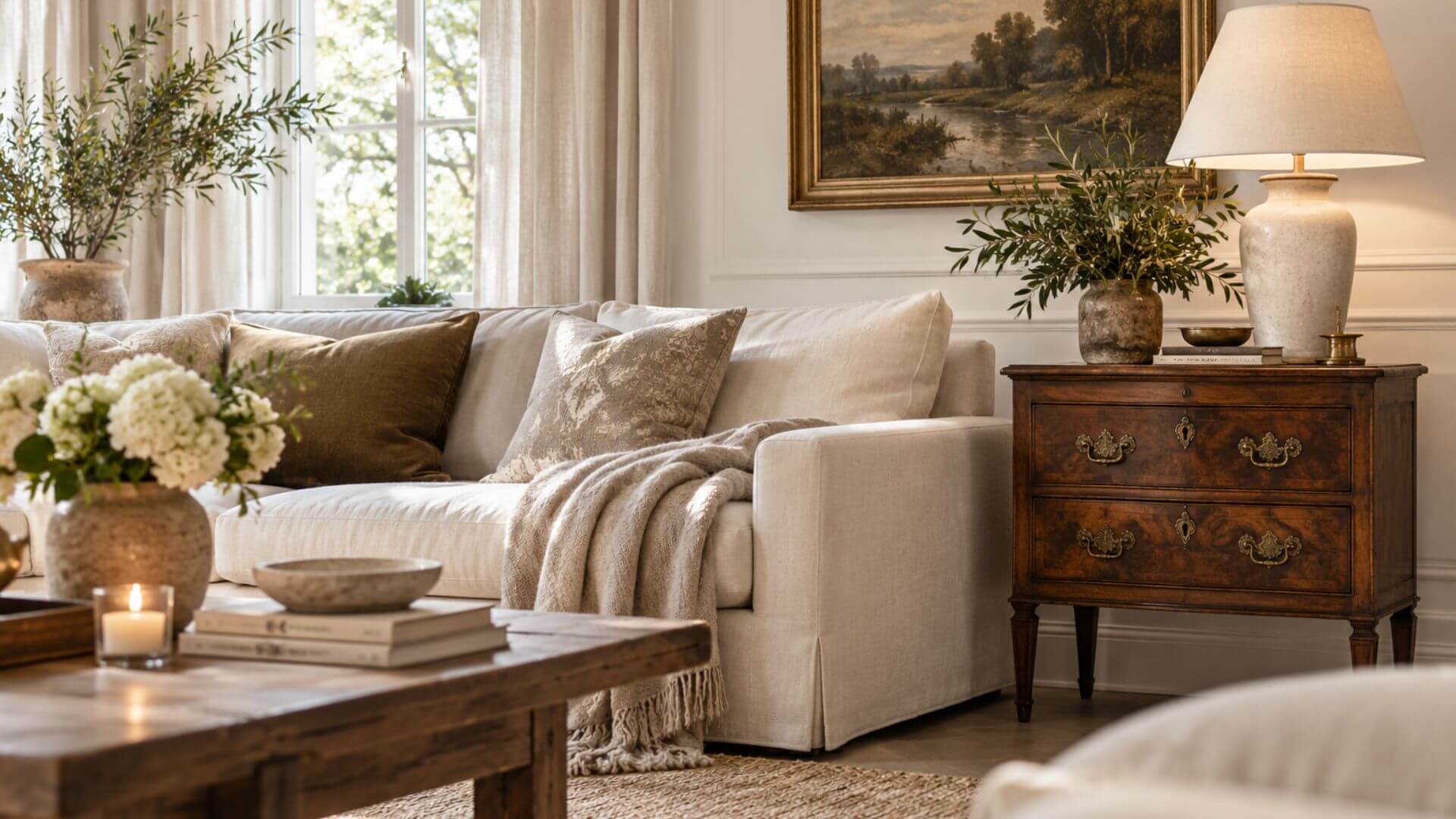 1. Make the Room Look Intentionally Designed, Not Expensively Furnished
One of the biggest differences between an ordinary living room and a sophisticated one is visual intention.
In a beautifully composed space, furniture feels connected. The sofa, chairs, coffee table, and rug work together rather than looking like separate purchases.
Start by looking at the room as a whole.
Does the furniture arrangement create a natural conversation area? Is there enough space to move comfortably? Does one piece dominate while everything else looks undersized?
Before buying anything, experiment with placement. Move an armchair closer to the sofa, reposition the coffee table, or remove an unnecessary piece.
Designer secret: Expensive-looking interiors often have fewer competing focal points. Give the eye somewhere to rest and something beautiful to notice.
Budget move: Rearrange what you already own before spending a dollar.
2. Use Curtains to Create the Illusion of Height
Window treatments can dramatically change how a living room feels.
Curtains hung directly above the window frame can make the window appear smaller. Hanging the rod higher and extending it beyond the frame often creates a more generous, architectural effect.
Choose curtains with enough fullness to hang in soft folds. Linen-look fabrics, cotton blends, and understated woven textures can look elegant without being expensive.
For a tailored appearance, aim for panels that just reach the floor or lightly graze it, depending on your preferred style.
Avoid curtains that stop awkwardly above the floor or look too narrow when closed.
Designer secret: Window treatments should frame the architecture, not simply cover the glass.
Budget move: Choose simple ready-made panels and adjust the hem for a custom-looking fit.
3. Choose One Generous Element Instead of Several Small Ones
A room filled with small furniture and tiny accessories can feel visually fragmented.
Sometimes, one generously sized element creates a much stronger impression.
It might be a large framed artwork, a substantial mirror, an appropriately sized rug, or an oversized ceramic vessel with a few branches.
The key is proportion. A large piece should relate comfortably to the furniture and available wall space rather than overwhelm the room.
For example, a well-proportioned artwork above a sofa often looks more intentional than several unrelated small prints.
Designer secret: Scale can communicate confidence. You don’t need more decoration — you need the right visual weight.
Budget move: Create one large piece of art using a vintage print, a photograph, or an inexpensive frame with a generous mat.
4. Make Inexpensive Materials Look More Refined
A sophisticated room doesn’t require every material to be costly.
What matters is how finishes relate to one another.
Combine matte ceramics with warm wood, a woven textile with smooth glass, or an aged brass detail with a softly textured surface.
Try to avoid filling the room with too many imitation luxury finishes. Several competing marble effects, metallic coatings, and glossy surfaces can make the overall design feel less cohesive.
Instead, choose materials that look convincing and age gracefully.
Real wood purchased secondhand, a simple stoneware vase, or a cotton throw may bring more character than a decorative object designed to imitate something expensive.
Designer secret: Authenticity often looks more luxurious than imitation.
Budget move: Search thrift stores and estate sales for solid wood, glass, ceramics, and interesting metal objects.
5. Create a Quiet, Sophisticated Color Story
An expensive-looking living room doesn’t have to be beige.
Rich navy, olive green, chocolate brown, muted burgundy, and terracotta can all feel elegant when combined thoughtfully.
The important thing is to establish a clear relationship between the colors.
Start with a main color, introduce a supporting tone, and use a smaller amount of contrast to create interest.
For example:
-
Warm ivory, mushroom taupe, and dusty blue
-
Oatmeal, olive green, and aged brass
-
Deep navy, camel, and warm cream
-
Soft greige, walnut brown, and muted burgundy
Repeat a few tones in different places so the room feels connected.
Designer secret: A restrained palette allows inexpensive and expensive pieces to sit comfortably together.
Budget move: Update cushions, artwork, or small accessories instead of replacing large furniture.
6. Give Lighting the Attention It Deserves
Lighting can make a beautifully furnished room feel either welcoming or unfinished.
Rather than relying entirely on a ceiling fixture, use light at several heights.
A table lamp on a vintage cabinet, a floor lamp beside an armchair, and soft ambient lighting can create a much richer atmosphere.
Pay attention to lampshades, too. A simple fabric shade can diffuse light beautifully, while a sculptural lamp base adds character during the day.
For many living rooms, warm-white bulbs around 2700K create a welcoming evening atmosphere. Choose brightness according to the task and use dimmers where suitable.
Designer secret: Light reveals texture. It gives depth to wood, softness to fabrics, and atmosphere to ordinary objects.
Budget move: Change the bulb, shade, or position of an existing lamp before purchasing a new one.
7. The Unexpected Luxury Secret: Find the Piece With a Past
Imagine opening an old attic trunk and discovering a small wooden cabinet that hasn’t been used in decades.
Its finish is worn. The handles have darkened with age. It might have belonged to a grandparent, or perhaps nobody remembers where it came from.
At first glance, it doesn’t look particularly valuable.
But after a careful cleaning, a little repair work, and a new place beside a contemporary sofa, it becomes the most interesting piece in the room.
Suddenly, the living room has something no furniture catalog can reproduce: a sense of history.
This is the secret behind many beautifully collected interiors. Their character comes from objects that were not purchased together.
What should you look for?
An overlooked treasure might be:
-
A small solid-wood side table with beautiful proportions
-
An old mirror with an unusual frame
-
A wooden chest that could become a coffee table
-
A vintage ceramic lamp with a simple new shade
-
A framed family photograph or an inherited painting
-
A decorative box, tray, or handmade object with a meaningful story
Not every old object is worth keeping. Look for good proportions, appealing materials, useful function, or personal significance.
Restore it — but don’t erase its character
Start with gentle cleaning and assess the condition before sanding, painting, or replacing hardware.
Sometimes, the original finish and small signs of age are exactly what make an object special.
Valuable antiques may lose historical or monetary value through inappropriate restoration, so seek specialist advice before making irreversible changes.
For vintage electrical items, have wiring and fittings checked by a qualified professional before use. Be cautious with old painted surfaces, which may contain lead.
Designer secret: One meaningful vintage piece can give a room more identity than an entire collection of new accessories.
Budget move: Explore your own storage, family belongings, thrift stores, and estate sales before buying new.
The most expensive-looking piece in your living room might be the one that cost you nothing.
8. Make Everyday Objects Look Curated
Beautiful rooms don’t need to hide every sign of daily life.
Books, ceramics, photographs, and small personal collections can become part of the design when displayed thoughtfully.
Instead of scattering objects across every surface, create one or two intentional arrangements.
Try placing a small stack of books beside a ceramic bowl, or a single sculptural object next to a table lamp.
Vary the heights and shapes, and leave some open space around each arrangement.
Avoid treating every surface as a display area. A little empty space makes individual objects more noticeable.
Designer secret: A curated room feels collected over time, not decorated in one shopping trip.
Budget move: Shop your own home. Move objects between rooms and experiment with new combinations.
9. Invest in the Details You Touch Every Day
Not every upgrade needs to be visible from across the room.
Sometimes, the sense of quality comes from small everyday interactions.
A drawer that opens smoothly. A comfortable cushion insert. A solid-feeling handle. A well-finished tabletop.
These details make a home feel considered and enjoyable to use.
Rather than buying many decorative accessories, identify the few elements that affect your daily experience most.
Replace worn cushion inserts, repair a loose furniture joint, or upgrade an inexpensive-looking knob on a cabinet that is otherwise in good condition.
Designer secret: True luxury is not only how a room photographs. It is how the room feels to live in.
Budget move: Repair and improve one frequently used item rather than buying several decorative replacements.
10. Leave One Thing Beautifully Unfinished
A sophisticated living room doesn’t need to look perfectly staged.
In fact, rooms can lose their personality when every cushion is arranged symmetrically, every object matches, and every corner looks newly decorated.
Allow a little individuality.
A favorite book left on the coffee table, a vintage chair that doesn’t match the sofa, or an unusual piece of art can make the room feel more authentic.
This doesn’t mean creating clutter. It means resisting the urge to make everything look like a coordinated furniture collection.
The goal is a room that feels refined but still belongs to someone.
Designer secret: The most memorable interiors often have one unexpected detail that breaks the rules beautifully.
Budget move: Keep something you genuinely love, even if it isn’t part of the latest decorating trend.
Where Should You Spend — and Where Should You Save?
If you’re decorating a living room on a budget, prioritize the things that affect comfort, function, and the overall composition.
| Worth prioritizing | Good places to save |
|---|---|
| Comfortable, supportive seating | Decorative accessories |
| An appropriately sized rug | Trend-driven accent pieces |
| Safe, functional lighting | Simple curtains and frames |
| Durable, frequently used furniture | Secondhand side tables and ceramics |
| Necessary repairs and quality materials | Styling objects you already own |
A larger price tag does not automatically mean better quality. Consider durability, construction, comfort, and how long you expect to use each piece.
The Final Secret: Make Your Home Look Collected, Not Purchased
The most beautiful living rooms rarely feel as though everything arrived on the same day.
They evolve.
A sofa is chosen for comfort. A lamp is moved from another room. A secondhand table is restored. A painting inherited from a relative finds its place above a cabinet.
Gradually, the room develops a visual story.
That’s what makes it feel distinctive.
Creating an expensive-looking living room on a budget isn’t about pretending everything is luxurious. It’s about choosing carefully, understanding proportions, appreciating materials, and recognizing the beauty of things that already have a history.
Sometimes, the smartest design decision isn’t what to buy next.
It’s what to rediscover.
Frequently Asked Questions
How can I make my living room look expensive without buying new furniture?
Start by improving furniture placement, adjusting lighting, hanging curtains at a more flattering height, and creating a cohesive color palette. Repositioning existing artwork and accessories can also make a noticeable difference without requiring new purchases.
What colors make a living room look luxurious?
Warm neutrals, deep blues, olive greens, muted burgundy, and rich browns can all create a sophisticated look. The effect depends more on how colors are balanced than on any single shade.
Can secondhand furniture make a living room look high-end?
Yes. Well-chosen secondhand furniture can add craftsmanship, interesting materials, and individuality. Look for solid construction, good proportions, and pieces that complement your existing furniture.
What makes a living room look cheap?
Common issues include furniture that is poorly proportioned, undersized rugs, overly crowded surfaces, inconsistent finishes, and decorative items that compete for attention. Improving balance and reducing visual clutter can help.
What is the easiest budget-friendly living room upgrade?
Rearranging furniture and improving lighting are two of the simplest places to begin. Both can change how a room looks and feels without major renovation or expense.